Howley to Become Third Mountaineer Gridder Inducted into Pro Football Hall of Fame
July 28, 2023 01:30 PM | Football, Blog
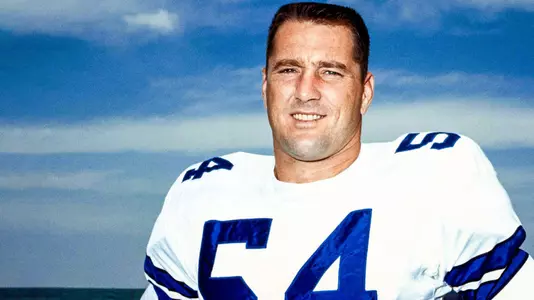
MORGANTOWN, W.Va. – Next week, Chuck Howley will be officially inducted into the Pro Football Hall of Fame in Canton, Ohio, becoming just the third player from West Virginia University to be honored.
Official enshrinement ceremonies will take place on Saturday, Aug. 5 and Cowboys teammate Bob Lilly will be presenting him.
Chuck Howley is sometimes forgotten in West Virginia University sports lore because he didn’t carry the football, injuries curtailed a good portion of his collegiate career, and he wasn’t a self-promoter.
He didn’t play in New York City like middle linebacker Sam Huff once did and wasn't on magazine covers nor featured in television documentaries like Huff was, but make no mistake, Howley was great in every sense of the word.
When you talk about the most naturally gifted athletes in school history, Chuck Howley’s name is right near the top of the list. He lettered in five sports at WVU.
FIVE!
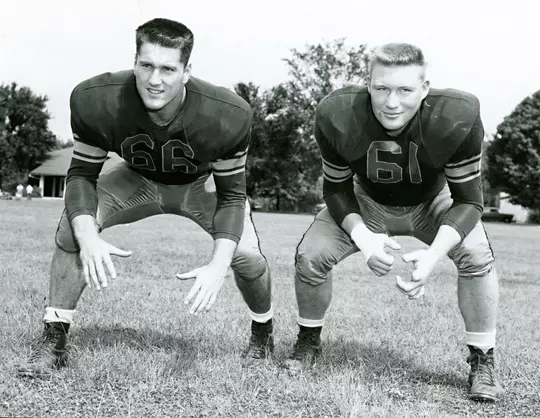
He was a two-way standout performer in football, playing offensive and defensive guard, not outside linebacker like he did in the pros with the Dallas Cowboys. He was a sprinter and a weight-man on the track team, a heavyweight wrestler, a diver on the swimming team and a trampolinist in gymnastics.
When he attended Warwood High, he also played baseball and did all the place kicking and punting for his team.
I still have the transcriptions from the three different telephone conversations I had with Chuck through the years, once in 2007, again in 2009 and finally in 2011. I asked him about different aspects of his playing career and life, totaling about an hour and a half in all. I even got to meet him once briefly when his granddaughter was being recruited to play soccer at WVU.
He patiently and politely answered everything I asked him, even the dumb questions. When you don’t know where to start you always start at the beginning, so I wanted to know what got him involved in sports growing up in Warwood, West Virginia, in the late 1940s and early 1950s.
To my astonishment, he wasn’t really interested in sports as a youngster.
“I didn’t start playing football until I was a junior in high school,” he said in 2007. “I had three older brothers and I got knocked around quite a bit by them. As far as sports were concerned, our parents really didn’t let us join sports activities so all my brothers before me didn’t play.
“It was my brother that was just older than I was who I remember one high school ballgame or something he was the equipment manager, and they ran out of substitutions. He went in and played, and my mother found out about it and said, ‘What am I going to do?’ From that time on I was able to go out and play football.”
That opened a whole new world to Chuck from track to swimming to baseball to even gymnastics.
“It was just something to do,” he said of gymnastics. “I enjoyed doing it. When I was in high school, I did a lot of gymnastics, and I was acquainted with a group of boys that were kind of gymnasts at the YMCA and the PTA shows and high school type things. It was kind of a show group at the Y, and it was very interesting for me. My agility, I thought, was excellent as a result of that.”
Despite getting a late start to his football career, Chuck was soon discovered by Indiana coach Bernie Crimmins and considered a scholarship offer from the Hoosiers.
“But at the last minute, I decided that everyone I knew was going to the University, so I changed my mind,” he explained. “I called (WVU coach) Pappy Lewis and asked him, ‘Coach, do I still have a scholarship because I’d like to come to the University?’ That’s kind of what transpired.”
Notice that Chuck didn’t refer to West Virginia as WVU but rather the “University” - as most West Virginians did back then because WVU was the ONLY university in the state. Anyone around here older than 60 who references the University does so by capitalizing the U, in case you were wondering.
At any rate, Howley played just one full season at WVU in 1956. He missed two games his sophomore year in 1955 and only played five games during his senior campaign in 1957 after breaking his jaw during practice prior to the Penn State game.
That effectively ended his collegiate career.
“I don’t even remember if we were in pads but, somehow, I stuck my head in there and caught a knee in the jaw,” he recalled. “I think it was on Tuesday or Wednesday and they decided to send me to Wheeling to have it operated on, and just as soon as that was over, they could take me to Penn State to play in the football game.
“Of course, after I got in the hospital and had the surgery the doctor said, ‘He’s not going anywhere.’ I thought that’s all it was, just go in there and get it wired shut and then go off and play a game, but that’s not the way it was. The break was in a certain area and the doctor said, “Chuck, if you hit that you’re dead. You’re not going to play football again until that jaw heals.’”

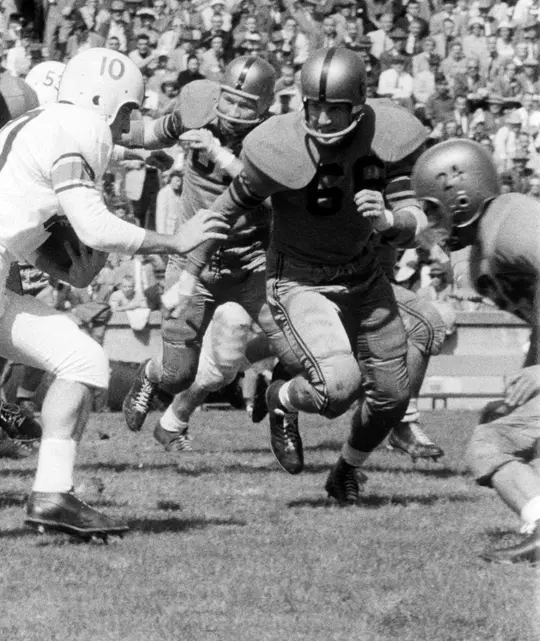
Following his senior season, Howley was the seventh overall pick in the 1958 NFL Draft by the Chicago Bears, a somewhat puzzling organization to Howley.
“When I was drafted No. 1 by the Bears I asked (West Virginia assistant coach) Bob Snyder, who played for the Bears at one time, ‘What are the Bears?’ I didn’t know a whole lot about pro football at the time. I just loved playing football at the University and having the camaraderie that I had with my fellow players.”
In 1959, another serious injury to his knee proved pivotal to his professional career.
“I had my knee tore up with the Bears right before the season started,” he recalled. “It was a practice situation and I got crack-backed when the crack-back (block) was still legal. We were kind of goofing around and when a wide receiver gets pretty close to you, you know he’s coming after you.
“He kept scooting in and scooting in and about three or four plays went by without a crack-back. When he did, I hesitated for about a second before I went across the line of scrimmage, and he got me.”
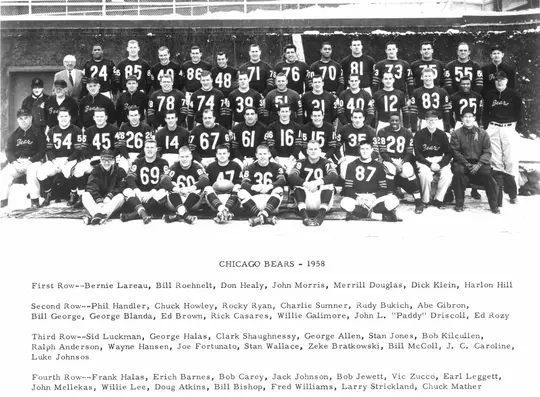
The injury nearly ended his career, and he was out of football for a year pumping gas at a service station back in Wheeling when the Dallas Cowboys acquired his rights during the 1961 NFL expansion draft.
Dallas, as a new franchise, was in desperate need of players, healthy or unhealthy.
“(Former Bears teammate) Don Healy was in the expansion draft to the Cowboys, and he was instrumental in telling them a little bit about me when they became interested in making a trade with the Bears for me,” Howley said. “He wasn’t the sole factor, because I think the Cowboys were interested and they did trade for me, and I was really happy that they did.”
Howley tested his knee out playing for the Alumni team against the WVU Varsity during the spring and had no problems with it.
Chuck’s professional career took off in 1963 when he made the All-Eastern Conference team, and he participated in the first of six Pro Bowls in 1965. From 1966 to 1970, Howley was considered one of the best outside linebackers in pro football.
He played corner linebacker in the Cowboys’ famous 4-3 defensive scheme and was often required to cover running backs coming out of the backfield because of his tremendous agility and speed.
“When I went to the Cowboys, I began what they would call flip-flop,” he explained. “The tight end was the strong side, and I always played the weak side because I could cover man-to-man in pass coverage.
“(Linebacker) Dave Edwards was stronger in the upper body than I was, and he could handle those tight ends, and I was on the other side because I could cover the halfbacks coming out of the backfield.”
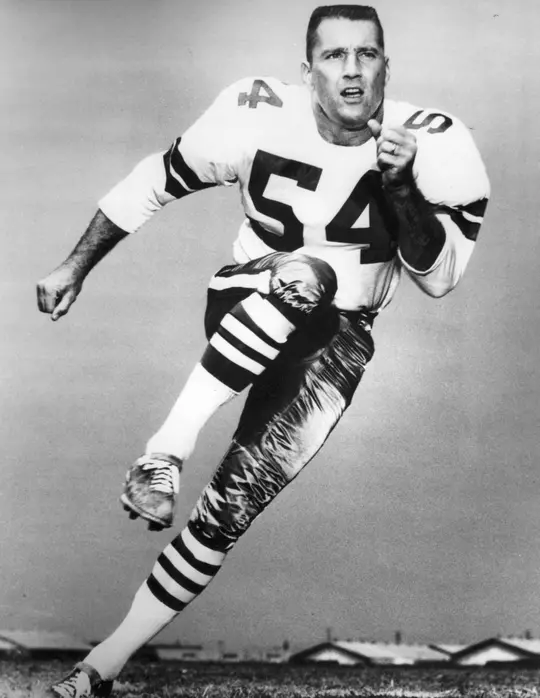
Playing for coach Tom Landry, a notorious micromanager who rarely let his players deviate from his system, Howley and defensive tackle Bob Lilly were sometimes given leeway to freelance a little bit.
“Sometimes we allow certain people like Chuck or Bob to vary from our defensive pattern,” Landry once said. “People like Chuck can often do this and get away with it because of their outstanding athletic ability.”
Howley said Landry greatly influenced his career.
“I think in our own ways we all had our feelings for him, and we respected him as a man,” he said. “Now, a lot of players thought he was trying to run religion down their throats, and they kind of resented that a little bit, but they didn’t disrespect him.”
Howley also had a great respect for Cowboys general manager Tex Schramm.
“I remember when I went to the Cowboys, Tex Schramm gave me $7,000 and he gave me a $500 bonus because I told him I was going to get married before training camp,” he recalled. “He said, ‘I’ll tell you what, you call me the week before and here is a check for $500 and if it’s still on, I’ll send you that check.’ And he did.”
Howley admitted he never had representation for any of his contract negotiations with Schramm. “Maybe that’s why I lost out so much,” he laughed, “but I always felt I was somewhere in the ballpark with the rest of them.”
Howley played in one of the most memorable games in pro football history, later immortalized as the “Ice Bowl” by NFL Films. It was the 1967 NFL Championship Game played in 13-below-zero temperatures at Lambeau Field in Green Bay, Wisconsin.
The Packers rallied to win the game 21-17.
“When you’re playing, I don’t think you realize (how cold it was),” Howley said. “I think our down lineman realized it because they had to put their hand on the ground every time. My only problem was the second half there was a mist in the air and the heater on the field ceased to work and it began to ice up and it was very difficult to get your footing.
“You were slipping and sliding and when you were trying to cover somebody out of the backfield you had to make a choice. If you made a choice and it was the wrong one you couldn’t stop and go back the other way.”
Howley’s most memorable performance also came with another loss, this one to the Baltimore Colts in Super V played on Jan. 17, 1971, at Miami’s Orange Bowl. He was named the game’s MVP, still today the only player from a losing team to ever be recognized.
“That’s what they remember me for,” he said.
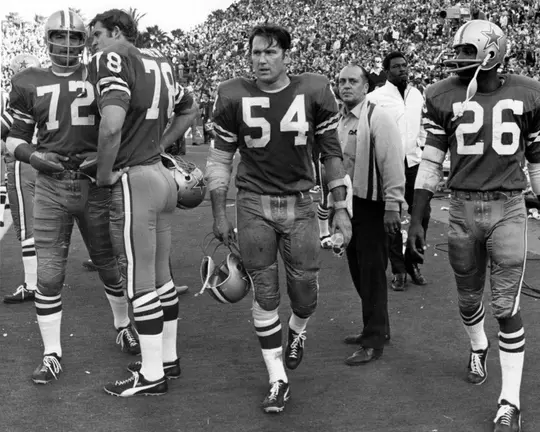
Howley was so upset that his team lost 16-13 to the Colts that he wasn’t even aware he had been named the game’s MVP until some sportswriters mentioned it to him in the locker room afterward. The game featured a combined 11 turnovers and was won on a 32-yard field goal by rookie kicker Jim O’Brien with five seconds left.
That’s how a linebacker from the losing team gets MVP and the keys to a new car, a Dodge Charger. Howley decided to give the car to his wife.
“She went out to a bridge party one night and she hit the accelerator and the tires squealed and she brought the car right home and she said, ‘You take it! I don’t want it!’” he laughed.
A year later, Howley was on the winning side of things when the Cowboys defeated Miami 24-3 in Super Bowl VI on Jan. 16, 1972. His 15-year career ended in 1973 after sustaining another serious knee injury.
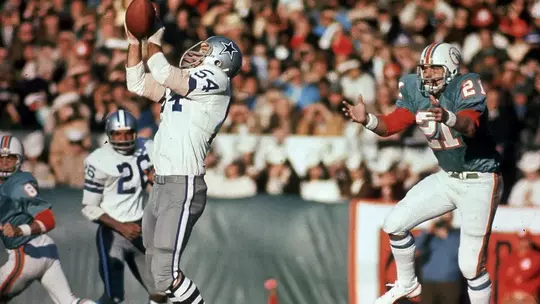
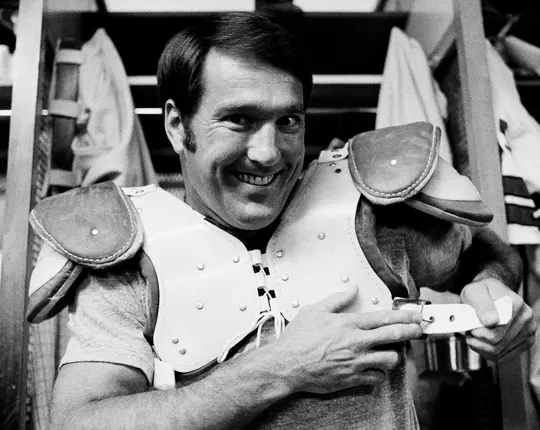
Howley earned first team All-Pro five times and made the second team once in 1971. He appeared in six Pro Bowls and was inducted into the Cowboys Ring of Honor in 1977.
His post-NFL career included a highly successful venture running a uniform rental business in suburban Dallas.
There is currently a push going on in Wheeling urging the city council to rename the field at Warwood’s Garden Park after the local legend. A documentary is also being planned of Howley’s life that will air around the time of his Hall of Fame enshrinement.
In recent years, Howley, 86, has lived quietly in retirement out of the spotlight at his Happy Hollow ranch in Wills Point, Texas. According to the Dallas Morning News, he is suffering from late-stage dementia.
His son, Scott, handles most of his father’s media requests these days, including the Seniors Committee’s announcement last February that his dad was finally going to be inducted into the Pro Football Hall of Fame this summer.
“We’re all thrilled about this,” Scott said. “We’re just so excited about dad.”
In a fleeting moment of clarity, Chuck seemed to understand, telling his caregiver that he was going to need a new suit for the ceremony.
Several years ago, as each year passed without a call from the Hall of Fame, I asked Chuck if it bothered him that he might forever be known as the answer to one of pro football’s most popular trivia questions.
He simply shrugged.
“No, it doesn’t bother me,” he answered. “I know in my mind that I did what I needed to do and that was my best. If my best wasn’t good enough, then maybe I should have tried harder.”