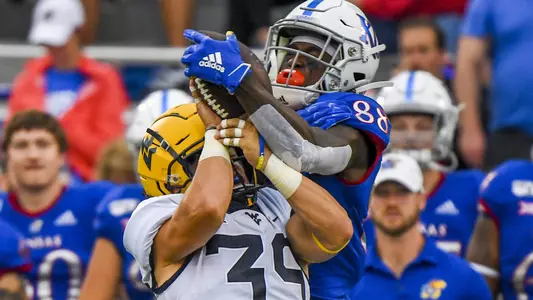
Photo by: All Pro Photography/Dale Sparks
WVU’s Brown Already a Master at Game Management
September 22, 2019 10:54 AM | Football
MORGANTOWN, W.Va. - Many, many years ago, long before the word analytics was ever associated with sports, I once listened to a wise, old baseball coach talk about managing percentages.
His point was the most successful coaches understood basic percentages and how they correlated to performance.
That means you don't bat an eye late in games if you have to replace a lefthanded hitter who struggles to hit lefthanded pitching, no matter how good that lefthanded hitter is. I actually saw this happen once to an All-American player here in a conference tournament game, and it turned out to be the correct decision.
As it relates to football, the percentages say you don't run your quarterback sideways on fourth and 1 at midfield late in a game you are losing.
The percentages say you don't throw downfield seam passes to 5-foot-6 slot receivers even if they are open, because the window to complete those type of passes is far too tight.
The percentages dictate that you don't try to score points from your own 3-yard-line with less than a minute to play in the first half of a football game you are only trailing by a touchdown.
Today, analytics help coaches avoid making those mistakes.
Joe Paterno didn't have access to analytics, that I am aware of, but he always seemed to sense when West Virginia was going to come with an all-out blitz and his answer was to throw a screen pass to a Suhey or a Guman for one of those long, lumbering, meandering touchdowns.
Bear Bryant didn't have access to analytics, that I am aware of, but he always seemed to put Alabama in a position to win big football games.
Sure, good players always help, but you've got to know how to manage those good players and also manage the situations in which you put them.
We are already seeing some of these things play out in the four football games we've watched Neal Brown coach at West Virginia so far.
We saw it in the James Madison game the way he nursed a young and inexperienced offense, making adjustments and corrections at halftime to turn a 7-3 deficit into a 20-13 victory.
We saw it a week later in the blowout loss to Missouri when Brown regrouped his defeated team at halftime and got them to play even with the far-more talented Tigers in the second half.
Brown admitted afterward that if all things were equal and his guys performed up to their capabilities, Missouri was still probably a touchdown or two better than West Virginia at this point.
Even the most delusional Mountaineer fan would have to agree with the coach.
Then, we really saw it two weeks ago the way Brown got his guys reorganized to blow out a solid NC State team that is now 3-1. Drastic changes were made on the offensive line because Brown said keeping things the same was "the definition of insanity."
We saw it in the way he managed that game by playing to his team's strengths and minimizing its weaknesses.
We saw it when he chose to take a knee on the point-after conversion instead of kicking it to go ahead by 18 with three minutes to go when that extra point was only meaningful to the gamblers. Analytics told him the risks of having a blocked conversion kick returned for two points were far greater than kicking it.
Analytics, by the way, also told Brown that teams have a 90 percent chance of winning when it blocks a punt, which West Virginia did against the Wolfpack that afternoon.
We also saw it again yesterday in Lawrence, Kansas, the way Brown managed a game that was always seemingly teetering in one direction or the other.
West Virginia scored first and Kansas tied it. Then Brown managed the end of the first half and that brisk Kansas wind to perfection by taking a 10-7 lead into the locker room at halftime.
Once more, he made the necessary adjustments to come out and score a touchdown on the opening drive of the second half to give his team a two-possession lead.
Kansas eventually fought back to make it a field-goal game with three minutes to go in the third quarter. Sensing riverboat gambler Les Miles was going to make another riverboat gambler decision, Brown had his guys in position to field the pooch kick Kansas tried.
The Jayhawks actually came up with the football when freshman Jamahl Horne plucked it out of the air, but the problem was he didn't allow Dante Bonamico the opportunity to catch it first - and Bonamico was right there in position to catch it!
Brown turned that into points, and he used a Keith Washington II interception at midfield to get even more points.
Washington made a terrific, athletic play on that pick, for sure, but it was partly a product of some great coaching when he was instructed to sag back in that particular coverage in case Carter Stanley underthrew his pass, which he did.
And we saw it at the end of the game when Brown chose to punt the football on Kansas' 34 with 38 seconds to go and West Virginia facing a fourth and 6.
It ultimately turned out to be unsuccessful when Josh Growden's punt rolled into the end zone, but the logic was sound: make Kansas, without any timeouts, drive the length of the field in 32 seconds to score a winning touchdown.
Had West Virginia gone for it and failed, the Jayhawks would have had the ball at their 34 instead of the 20 where they began their final drive.
Where did the football end up when the game clock read zero? The West Virginia 12, so even those 14 extra yards made a huge difference.
Today, analytics are frequently cited when the correct decisions are made to win football games.
In the old days, it was called good, old-fashioned common sense. The good coaches used it some of the time and the great ones used it all of the time.
It's clear Neal Brown possesses good, old-fashioned common sense, even if it's rooted in analytics.
Of course, the percentages don't always work and not all decisions are going to be successful, which is why someone always eventually hits the lottery. But this isn't Xbox. You don't go for it on fourth and 20 from your own 1.
When coaches properly manage the percentages, as that old-time baseball coach once talked about, it means you will be successful far more than not.
West Virginia is going to lose more football games under Brown, that's a certainty, but it's going to be a result of the other team being better than Brown's, not because of game mismanagement.
That's another certainty.
His point was the most successful coaches understood basic percentages and how they correlated to performance.
That means you don't bat an eye late in games if you have to replace a lefthanded hitter who struggles to hit lefthanded pitching, no matter how good that lefthanded hitter is. I actually saw this happen once to an All-American player here in a conference tournament game, and it turned out to be the correct decision.
As it relates to football, the percentages say you don't run your quarterback sideways on fourth and 1 at midfield late in a game you are losing.
The percentages say you don't throw downfield seam passes to 5-foot-6 slot receivers even if they are open, because the window to complete those type of passes is far too tight.
The percentages dictate that you don't try to score points from your own 3-yard-line with less than a minute to play in the first half of a football game you are only trailing by a touchdown.
Today, analytics help coaches avoid making those mistakes.
Joe Paterno didn't have access to analytics, that I am aware of, but he always seemed to sense when West Virginia was going to come with an all-out blitz and his answer was to throw a screen pass to a Suhey or a Guman for one of those long, lumbering, meandering touchdowns.
Bear Bryant didn't have access to analytics, that I am aware of, but he always seemed to put Alabama in a position to win big football games.
Sure, good players always help, but you've got to know how to manage those good players and also manage the situations in which you put them.
We are already seeing some of these things play out in the four football games we've watched Neal Brown coach at West Virginia so far.
We saw it in the James Madison game the way he nursed a young and inexperienced offense, making adjustments and corrections at halftime to turn a 7-3 deficit into a 20-13 victory.
We saw it a week later in the blowout loss to Missouri when Brown regrouped his defeated team at halftime and got them to play even with the far-more talented Tigers in the second half.
Brown admitted afterward that if all things were equal and his guys performed up to their capabilities, Missouri was still probably a touchdown or two better than West Virginia at this point.
Even the most delusional Mountaineer fan would have to agree with the coach.
Then, we really saw it two weeks ago the way Brown got his guys reorganized to blow out a solid NC State team that is now 3-1. Drastic changes were made on the offensive line because Brown said keeping things the same was "the definition of insanity."
We saw it in the way he managed that game by playing to his team's strengths and minimizing its weaknesses.
We saw it when he chose to take a knee on the point-after conversion instead of kicking it to go ahead by 18 with three minutes to go when that extra point was only meaningful to the gamblers. Analytics told him the risks of having a blocked conversion kick returned for two points were far greater than kicking it.
Analytics, by the way, also told Brown that teams have a 90 percent chance of winning when it blocks a punt, which West Virginia did against the Wolfpack that afternoon.
We also saw it again yesterday in Lawrence, Kansas, the way Brown managed a game that was always seemingly teetering in one direction or the other.
West Virginia scored first and Kansas tied it. Then Brown managed the end of the first half and that brisk Kansas wind to perfection by taking a 10-7 lead into the locker room at halftime.
Once more, he made the necessary adjustments to come out and score a touchdown on the opening drive of the second half to give his team a two-possession lead.
Kansas eventually fought back to make it a field-goal game with three minutes to go in the third quarter. Sensing riverboat gambler Les Miles was going to make another riverboat gambler decision, Brown had his guys in position to field the pooch kick Kansas tried.
The Jayhawks actually came up with the football when freshman Jamahl Horne plucked it out of the air, but the problem was he didn't allow Dante Bonamico the opportunity to catch it first - and Bonamico was right there in position to catch it!
Brown turned that into points, and he used a Keith Washington II interception at midfield to get even more points.
Washington made a terrific, athletic play on that pick, for sure, but it was partly a product of some great coaching when he was instructed to sag back in that particular coverage in case Carter Stanley underthrew his pass, which he did.
And we saw it at the end of the game when Brown chose to punt the football on Kansas' 34 with 38 seconds to go and West Virginia facing a fourth and 6.
It ultimately turned out to be unsuccessful when Josh Growden's punt rolled into the end zone, but the logic was sound: make Kansas, without any timeouts, drive the length of the field in 32 seconds to score a winning touchdown.
Had West Virginia gone for it and failed, the Jayhawks would have had the ball at their 34 instead of the 20 where they began their final drive.
Where did the football end up when the game clock read zero? The West Virginia 12, so even those 14 extra yards made a huge difference.
Today, analytics are frequently cited when the correct decisions are made to win football games.
In the old days, it was called good, old-fashioned common sense. The good coaches used it some of the time and the great ones used it all of the time.
It's clear Neal Brown possesses good, old-fashioned common sense, even if it's rooted in analytics.
Of course, the percentages don't always work and not all decisions are going to be successful, which is why someone always eventually hits the lottery. But this isn't Xbox. You don't go for it on fourth and 20 from your own 1.
When coaches properly manage the percentages, as that old-time baseball coach once talked about, it means you will be successful far more than not.
West Virginia is going to lose more football games under Brown, that's a certainty, but it's going to be a result of the other team being better than Brown's, not because of game mismanagement.
That's another certainty.

Players Mentioned



John Neider | April 18
Saturday, April 18
Coach Zac Alley | April 18
Saturday, April 18
Coach Rich Rodriguez | April 18
Saturday, April 18
Coach Pat Kirkland | April 15
Thursday, April 16