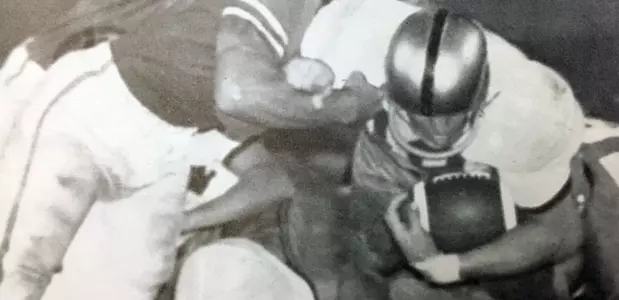
Krutko-Main-Texas1956.jpg
Campus Connection: '56 Texas Win Recalled
November 12, 2015 07:03 PM | Football

Larry Krutko versus Texas, 1956
MORGANTOWN, W.Va. - At first glance, West Virginia’s 7-6 win over Texas down in Austin in 1956 would seem to be one of the better victories for the Mountaineers during that period of time.
Stung by the criticism it received for earning a bid to face Georgia Tech in the 1954 Sugar Bowl on the basis of its weak Southern Conference schedule, West Virginia made a concerted effort to upgrade its grid slates in the mid-to-late 1950s.
Games in the early 1950s against Western Reserve, Waynesburg, Geneva and Fordham were replaced by the likes of Texas and Miami, Florida in 1956, Wisconsin in 1957, Oklahoma and Indiana in 1958 and USC in 1959 – all on the road.
The first of these intersectional games - as they were known back then - came during week three of the 1956 season against the Longhorns.
Texas became formidable in the mid-1940s when coach Dana Bible discovered a quarterback named Bobby Layne out of Fort Worth, and Layne immediately helped the Longhorns to a Cotton Bowl berth in 1944.
Three years later in 1947, when Blair Cherry took over the head coaching reins, Layne once again got Texas to a big bowl when it played Alabama in the Sugar Bowl. Cherry had one more good year in 1950 before abruptly resigning at the end of the season.
Former Longhorn player Ed Price was tabbed to replace Cherry and his first three years in Austin were good ones with at least seven victories each season, including a Cotton Bowl triumph over Tennessee in 1952.
But the Longhorns began to slip in 1954 and the slide continued into 1956 when Texas began the year with a 44-20 beating at Southern Cal and then barely defeated Tulane, 7-6, in Austin the following week.
“I don’t think that was one of the better Texas teams, but it was the beginning of the season and the reality of them not being a good team wasn’t really known yet,” said West Virginia’s Larry Krutko, who hailed from nearby Carmichaels, Pennsylvania, and spent parts of three seasons playing fullback for the Pittsburgh Steelers from 1958-60.
Mountaineer quarterback Mickey Trimarki admitted he can recall very little about the Texas game, other than it was played at night and it took a long time to fly out there in a propeller-driven airplane.
And Trimarki, now in his late 70s, can still recall in pretty good detail West Virginia’s other big games that year against Pitt, Syracuse and Penn State.
But Texas? Not so much.
“I remember it being a tough game; it was running the ball and playing defense,” he said. “They threw the ball – they had two tall quarterbacks who could throw it."
Indeed, Texas was throwing the football back then almost the way teams in the Big 12 are today. The Longhorns had just four players topping 200 pounds in their starting lineup and the average weight of their line was a Jenny Craig-like 193 pounds.
West Virginia, on the other hand, averaged 209 pounds from tackle to tackle - and that was one of coach Art Lewis’ smaller Mountaineer teams compared to what he was putting out on the field in the early 1950s when he had Bruce Bosley, Sam Huff, Gene “Beef” Lamone and Joe Marconi.
Still, even with a smaller lineup in 1956, Lewis’ strategy was to run the football, run it again and then run it some more. Other than making a few substitutions and chain-smoking cigarettes, Lewis did very little else on the sidelines during games.
Former quarterback Fred Wyant once recalled running over to where Lewis was standing to ask him if there were any specific plays he wanted called.
“No,” Pappy said as he took a long drag on his cigarette, “you’re doing just fine, Freddy.”
“We just had one or two meetings during the week, if we had that,” Trimarki recalled. “We watched film but not like they do today – study, study, study game film and all that. We just went out and played. They told us tendencies and stuff like that, and we just went out there and did what they told us to do (during the week).”
Krutko, who doubled as the team’s linebacker on defense, was calling the defensive signals in the second half when the Longhorns were throwing the football on nearly every play.
Texas quarterbacks Joe Clements and Vance Matthews tried 25 passes that evening – 16 more than Trimarki attempted – completing 16 for 205 yards. During one stretch in the third quarter when the Longhorns were driving for their only touchdown, Clements completed six passes in a row.
“I was calling defensive signals in the second half for some reason, maybe Chuck (Howley) got hurt or something, but we played a 5-4 (defensive alignment) and they would ask me, ‘What are we going to do?’ I said, ‘5-4’ and I kept calling 5-4,” said Krutko.
“They’d say, ‘Anything else, Larry?’ What the hell else were we going to do? That’s the only defense we had against the pass!” he laughed.
Krutko was West Virginia’s key player that night, rushing 15 times for 69 yards on offense and making several important stops on defense. His straight-ahead runs against Texas’ small defensive front put the Mountaineers into position to score the game’s first touchdown midway through the third quarter.
It came when Krutko bulldozed his way in from the 15.
“It was just an off-guard play from what we called the one-hole,” Krutko recalled. “I ran straight up the middle and I was able to get in there.”
Once he crossed the goal line he said that was all he had left for the evening.
“After I made the run, it was such a hot night and it was the beginning of the season and I had a tendency to get cramps if I worked hard and that was my last play,” Krutko said. “I made it to the end zone and after that I knew I was gone. That was it.”
Texas responded by marching almost the length of the field in 13 plays, Clements mixing short passes with Walt Fondren runs.
Fondren was the Longhorns' star player and a speedy athlete Lewis thought was just as effective as South Carolina’s Steve Wadiak or Syracuse’s Jim Brown was as far as being a college runner, but the West Virginia players who faced him that night recall something else about Fondren.
“The thing I remember distinctly about him was that he was a millionaire,” said Krutko. “I guess his dad had a lot of oil money or something.”
It was Fondren who scored Texas’ touchdown at the beginning of the fourth quarter when he hauled in Clements’ short pass that bounced off the hands of West Virginia’s Bob Snider. However, Fondren, who also punted, threw some passes, caught a lot of the passes he didn’t throw, ran back punts and kickoffs and was also the team’s top ground gainer, couldn’t get his extra point kick to go through the uprights. He might have been a little bit winded at that point in the game, considering he was doing everything.
Snider did get his to go through, cause for celebration on the West Virginia sidelines considering that was the first placement he had successfully kicked since his high school days six years prior.
Snider was kicking that night because West Virginia’s other kickers missed all five PATs against Richmond the week prior, plus the big one against Pitt in the '56 opener that was the deciding point in a 14-13 loss to the Panthers.
With West Virginia clinging to its 7-6 lead late in the game, Clements marched the Longhorns to the Mountaineer 26 where a pass interference penalty in the end zone against West Virginia gave the Longhorns a first and goal at the seven.
Wayne Walsh ran two yards to the five and Clements got four yards through the right side to the one foot line.
From there, his two sneak attempts into the line couldn’t get the football past the goal line. West Virginia’s superior size had prevailed.
“They got the point and we didn’t – that’s about it,” said Price after the game. Three weeks later Price was hung in effigy by Texas students after the Longhorns lost 28-7 to Rice. A month after that he resigned to take an administrative role within the university.
In his place Texas hired a guy named Darrell Royal.
West Virginia, meanwhile, didn’t get much of a lift from its win at Texas. Syracuse defeated the Mountaineers, 27-20, in New York, and the Mountaineers also dropped competitive games at Penn State and Miami, Florida to finish the season with a 6-4 record.
West Virginia’s later intersectional junkets to Madison, Wisconsin, Norman, Oklahoma, Bloomington, Indiana and Los Angeles, California, turned out disastrous for the Mountaineers, and ultimately contributed to Lewis’ departure in the spring of 1960.
Games in the early 1950s against Western Reserve, Waynesburg, Geneva and Fordham were replaced by the likes of Texas and Miami, Florida in 1956, Wisconsin in 1957, Oklahoma and Indiana in 1958 and USC in 1959 – all on the road.
The first of these intersectional games - as they were known back then - came during week three of the 1956 season against the Longhorns.
Texas became formidable in the mid-1940s when coach Dana Bible discovered a quarterback named Bobby Layne out of Fort Worth, and Layne immediately helped the Longhorns to a Cotton Bowl berth in 1944.
Three years later in 1947, when Blair Cherry took over the head coaching reins, Layne once again got Texas to a big bowl when it played Alabama in the Sugar Bowl. Cherry had one more good year in 1950 before abruptly resigning at the end of the season.
Former Longhorn player Ed Price was tabbed to replace Cherry and his first three years in Austin were good ones with at least seven victories each season, including a Cotton Bowl triumph over Tennessee in 1952.
But the Longhorns began to slip in 1954 and the slide continued into 1956 when Texas began the year with a 44-20 beating at Southern Cal and then barely defeated Tulane, 7-6, in Austin the following week.
“I don’t think that was one of the better Texas teams, but it was the beginning of the season and the reality of them not being a good team wasn’t really known yet,” said West Virginia’s Larry Krutko, who hailed from nearby Carmichaels, Pennsylvania, and spent parts of three seasons playing fullback for the Pittsburgh Steelers from 1958-60.
Mountaineer quarterback Mickey Trimarki admitted he can recall very little about the Texas game, other than it was played at night and it took a long time to fly out there in a propeller-driven airplane.
And Trimarki, now in his late 70s, can still recall in pretty good detail West Virginia’s other big games that year against Pitt, Syracuse and Penn State.
But Texas? Not so much.
“I remember it being a tough game; it was running the ball and playing defense,” he said. “They threw the ball – they had two tall quarterbacks who could throw it."
Indeed, Texas was throwing the football back then almost the way teams in the Big 12 are today. The Longhorns had just four players topping 200 pounds in their starting lineup and the average weight of their line was a Jenny Craig-like 193 pounds.
West Virginia, on the other hand, averaged 209 pounds from tackle to tackle - and that was one of coach Art Lewis’ smaller Mountaineer teams compared to what he was putting out on the field in the early 1950s when he had Bruce Bosley, Sam Huff, Gene “Beef” Lamone and Joe Marconi.
Still, even with a smaller lineup in 1956, Lewis’ strategy was to run the football, run it again and then run it some more. Other than making a few substitutions and chain-smoking cigarettes, Lewis did very little else on the sidelines during games.
Former quarterback Fred Wyant once recalled running over to where Lewis was standing to ask him if there were any specific plays he wanted called.
“No,” Pappy said as he took a long drag on his cigarette, “you’re doing just fine, Freddy.”
“We just had one or two meetings during the week, if we had that,” Trimarki recalled. “We watched film but not like they do today – study, study, study game film and all that. We just went out and played. They told us tendencies and stuff like that, and we just went out there and did what they told us to do (during the week).”
Krutko, who doubled as the team’s linebacker on defense, was calling the defensive signals in the second half when the Longhorns were throwing the football on nearly every play.
Texas quarterbacks Joe Clements and Vance Matthews tried 25 passes that evening – 16 more than Trimarki attempted – completing 16 for 205 yards. During one stretch in the third quarter when the Longhorns were driving for their only touchdown, Clements completed six passes in a row.
“I was calling defensive signals in the second half for some reason, maybe Chuck (Howley) got hurt or something, but we played a 5-4 (defensive alignment) and they would ask me, ‘What are we going to do?’ I said, ‘5-4’ and I kept calling 5-4,” said Krutko.
“They’d say, ‘Anything else, Larry?’ What the hell else were we going to do? That’s the only defense we had against the pass!” he laughed.
Krutko was West Virginia’s key player that night, rushing 15 times for 69 yards on offense and making several important stops on defense. His straight-ahead runs against Texas’ small defensive front put the Mountaineers into position to score the game’s first touchdown midway through the third quarter.
It came when Krutko bulldozed his way in from the 15.
“It was just an off-guard play from what we called the one-hole,” Krutko recalled. “I ran straight up the middle and I was able to get in there.”
Once he crossed the goal line he said that was all he had left for the evening.
“After I made the run, it was such a hot night and it was the beginning of the season and I had a tendency to get cramps if I worked hard and that was my last play,” Krutko said. “I made it to the end zone and after that I knew I was gone. That was it.”
Texas responded by marching almost the length of the field in 13 plays, Clements mixing short passes with Walt Fondren runs.
Fondren was the Longhorns' star player and a speedy athlete Lewis thought was just as effective as South Carolina’s Steve Wadiak or Syracuse’s Jim Brown was as far as being a college runner, but the West Virginia players who faced him that night recall something else about Fondren.
“The thing I remember distinctly about him was that he was a millionaire,” said Krutko. “I guess his dad had a lot of oil money or something.”
It was Fondren who scored Texas’ touchdown at the beginning of the fourth quarter when he hauled in Clements’ short pass that bounced off the hands of West Virginia’s Bob Snider. However, Fondren, who also punted, threw some passes, caught a lot of the passes he didn’t throw, ran back punts and kickoffs and was also the team’s top ground gainer, couldn’t get his extra point kick to go through the uprights. He might have been a little bit winded at that point in the game, considering he was doing everything.
Snider did get his to go through, cause for celebration on the West Virginia sidelines considering that was the first placement he had successfully kicked since his high school days six years prior.
Snider was kicking that night because West Virginia’s other kickers missed all five PATs against Richmond the week prior, plus the big one against Pitt in the '56 opener that was the deciding point in a 14-13 loss to the Panthers.
With West Virginia clinging to its 7-6 lead late in the game, Clements marched the Longhorns to the Mountaineer 26 where a pass interference penalty in the end zone against West Virginia gave the Longhorns a first and goal at the seven.
Wayne Walsh ran two yards to the five and Clements got four yards through the right side to the one foot line.
From there, his two sneak attempts into the line couldn’t get the football past the goal line. West Virginia’s superior size had prevailed.
“They got the point and we didn’t – that’s about it,” said Price after the game. Three weeks later Price was hung in effigy by Texas students after the Longhorns lost 28-7 to Rice. A month after that he resigned to take an administrative role within the university.
In his place Texas hired a guy named Darrell Royal.
West Virginia, meanwhile, didn’t get much of a lift from its win at Texas. Syracuse defeated the Mountaineers, 27-20, in New York, and the Mountaineers also dropped competitive games at Penn State and Miami, Florida to finish the season with a 6-4 record.
West Virginia’s later intersectional junkets to Madison, Wisconsin, Norman, Oklahoma, Bloomington, Indiana and Los Angeles, California, turned out disastrous for the Mountaineers, and ultimately contributed to Lewis’ departure in the spring of 1960.

Friday, August 14
Friday, August 14
Friday, August 14
Friday, August 14