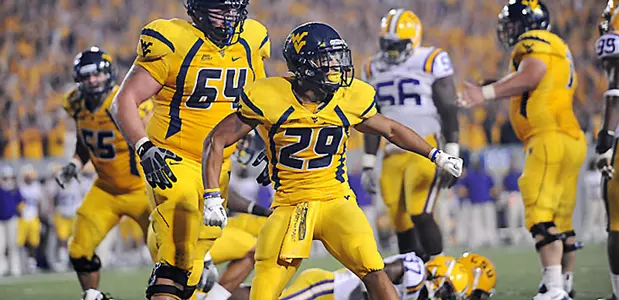
Garrison-Main-92411.jpg
LSU 47, WVU 21
September 24, 2011 10:12 PM | Football
MORGANTOWN, W.Va. – Jarrett Lee threw three touchdown passes, Michael Ford ran for two scores, and the LSU defense came up with four turnovers in a 47-21 victory over 16th-ranked West Virginia Saturday night in Morgantown.
LSU’s 47 points scored on the Mountaineers were the most given up by a WVU team at home since Maryland scored 48 in a 31-point victory on Oct. 5, 2002.
It was 36th straight non-conference win for the second-ranked Tigers dating back to 2002 and coach Les Miles’ 26 win over a ranked foe. It was also LSU’s third victory over a Top 25 team this year, the Tigers previously besting Oregon in Dallas and Mississippi State on the road last week.
“We showed up in a hostile environment and we had to play,” said Miles. “Our defense came to play and we got off to a nice start.”
“We got beat by a good football team,” added West Virginia coach Dana Holgorsen. “If I was to have scripted it, I probably wouldn’t have scripted it this way.”
West Virginia quarterback Geno Smith set school records for passing attempts (65), completions (38), and passing yards (463), while Tavon Austin finished the game with 11 receptions for 187 yards and Stedman Bailey added eight catches for 115 yards and a touchdown.
It was the second straight game West Virginia had dual 100-yard receivers.
Smith bested Gerald Fisher’s 60-year school record for attempts (against Maryland in 1951) and Bulger’s 13-year school record for passing yards (against Missouri in 1998 Insight.com Bowl). And Austin’s 187 yards receiving was the eighth-best performance in school history and his 287 all-purpose yards were the sixth-best total all-time.
But points are always more important than yards, and WVU had 26 fewer than the talented Tigers.
The Mountaineers were forced to play catch-up from the outset against the nation’s sixth-ranked defense, the Tigers stuffing West Virginia on its opening possession and then benefitting from a 14-yard Corey Smith punt to take over at the 42.
It took LSU eight plays to reach the end zone, Lee hooking up with Rueben Randall on a quick slant for an 11-yard score. The Tigers made it 13-0 late in the first quarter when they were able to turn a Brad Starks fumble at midfield (stripped by Tyrann Mathieu) into a Ford 22-yard touchdown run. All but seven yards of that LSU scoring drive came on the ground.
West Virginia answered with a 12-play, 73-yard drive that ended in the end zone when Stedman Bailey was able to shake free along the near sideline to score on a 20-yard touchdown reception. Smith completed passes of 13, 7, 14, 6, 6, 10 and 20 yards during the drive.
Then LSU made it 20-7 on its very next possession when Lee found Odell Beckham behind a drawn-up Mountaineer defense on a third and 1 at the 48 for a 52-yard touchdown. Beckham was able to get behind safety Terence Garvin on the play.
Mathieu topped off an impressive first half by batting into the air a Smith screen pass, catching it, and then returning it 17 yards to the WVU 1 to set up Chase Clement’s TD catch. Mathieu’s athletic play came about when Miles opted to accept a third down holding penalty on the Mountaineers to push the ball back to the West Virginia 25 and make it third and 19, instead of forcing West Virginia to punt on fourth and four.
At the beginning of the third quarter, the Tigers took the opening kickoff and marched to the West Virginia 13, but Randle dropped a sure touchdown catch in the back of the end zone, and Drew Alleman missed a 30-yard field goal to the left.
That allowed WVU to make things interesting, the Mountaineers driving 80 yards in six plays, culminated by a Tyler Urban 12-yard touchdown catch. A Smith-to-Austin quick pass behind the line of scrimmage for 38 yards was the key play of the drive.
Later in the period, West Virginia closed its deficit to six, 27-21, with 1:12 remaining in the third quarter when Dustin Garrison bounced in from the 1. Austin once again flipped the field, taking a pass down the middle of the field and racing 72 yards to the Tiger 18.
An incomplete pass, a short gain and an illegal procedure penalty pushed the Mountaineers back to the 20 where Garrison took a swing pass out in the left flat 19 yards to the LSU 1.
Garrison’s score electrified the announced crowd of 62,056, West Virginia's gold-clad supporters finally sensing their team was back in the game, but WVU’s momentum lasted all of 10 seconds – the amount of time it took Morris Claiborne to return Corey Smith’s kickoff for a touchdown.
Claiborne caught the ball at the 1, worked his way up the far sideline, breaking at least two tackles, and then cut back across the field for LSU’s 15th special teams score under Miles. It was also the second TD the West Virginia coverage unit has allowed this year – the Mountaineers gave up an 87-yard punt return for a TD in the opener against Marshall.
“Morris Claiborne’s return was right on time, and we were able to finish it off,” said Miles.
Claiborne’s kick return completely took the air out of the stadium, and a pair of late Tiger touchdown runs against a worn-out Mountaineer defense – the first a 15-yarder by Ford and the second an 18-yarder by Alfred Blue with just 3:03 remaining – provided the final margin.
The game ended just as it began 3 ½ hours earlier, LSU with the football at midfield after backing West Virginia up deep in its own territory.
“The offensive game plan was not a problem – turning the ball over four times is a problem, and they had something to do with that,” said Holgorsen.
The Tigers owned two of the game’s three phases, taking advantage of outstanding special teams play (punter Brad Wing averaged 48.7 yards per punt) and the defense forcing four turnovers and limiting the WVU ground game to just 3.2 yards per carry.
“We had four turnovers and they had none. We had twice as many penalties and the special teams were completely one sided, so those three things pretty much got them the victory,” said Holgorsen.
West Virginia had 533 total yards and 28 first downs against an LSU defense that came into the game allowing just 208 yards per game, while the Tigers produced 366 total yards, 186 of those coming on the ground.
“You can talk about 500 yards if you want to, but the only thing I am going to talk about tomorrow is four turnovers,” Holgorsen said. “Three out of four games we had zero turnovers.”
Spencer Ware led all rushers with 92 yards on 23 carries. Ford added 82 yards on just 12 attempts.
Lee completed 16-of-28 passes for 180 yards. Beckham had two catches for 82 yards.
Garrison was West Virginia’s top rusher with 46 yards on 10 carries.
LSU's victory boosts its record to 4-0 and gives it a case to lay claim for the nation's top ranking, while West Virginia drops to 3-1.
The Tigers face Kentucky next Saturday in Baton Rouge while the Mountaineers take on Bowling Green at Milan Puskar Stadium. Saturday’s Bowling Green contest will air on the Big East Network and will be televised locally on ROOT SPORTS.
LSU’s 47 points scored on the Mountaineers were the most given up by a WVU team at home since Maryland scored 48 in a 31-point victory on Oct. 5, 2002.
It was 36th straight non-conference win for the second-ranked Tigers dating back to 2002 and coach Les Miles’ 26 win over a ranked foe. It was also LSU’s third victory over a Top 25 team this year, the Tigers previously besting Oregon in Dallas and Mississippi State on the road last week.
“We showed up in a hostile environment and we had to play,” said Miles. “Our defense came to play and we got off to a nice start.”
“We got beat by a good football team,” added West Virginia coach Dana Holgorsen. “If I was to have scripted it, I probably wouldn’t have scripted it this way.”
West Virginia quarterback Geno Smith set school records for passing attempts (65), completions (38), and passing yards (463), while Tavon Austin finished the game with 11 receptions for 187 yards and Stedman Bailey added eight catches for 115 yards and a touchdown.
It was the second straight game West Virginia had dual 100-yard receivers.
Smith bested Gerald Fisher’s 60-year school record for attempts (against Maryland in 1951) and Bulger’s 13-year school record for passing yards (against Missouri in 1998 Insight.com Bowl). And Austin’s 187 yards receiving was the eighth-best performance in school history and his 287 all-purpose yards were the sixth-best total all-time.
But points are always more important than yards, and WVU had 26 fewer than the talented Tigers.
The Mountaineers were forced to play catch-up from the outset against the nation’s sixth-ranked defense, the Tigers stuffing West Virginia on its opening possession and then benefitting from a 14-yard Corey Smith punt to take over at the 42.
It took LSU eight plays to reach the end zone, Lee hooking up with Rueben Randall on a quick slant for an 11-yard score. The Tigers made it 13-0 late in the first quarter when they were able to turn a Brad Starks fumble at midfield (stripped by Tyrann Mathieu) into a Ford 22-yard touchdown run. All but seven yards of that LSU scoring drive came on the ground.
West Virginia answered with a 12-play, 73-yard drive that ended in the end zone when Stedman Bailey was able to shake free along the near sideline to score on a 20-yard touchdown reception. Smith completed passes of 13, 7, 14, 6, 6, 10 and 20 yards during the drive.
Then LSU made it 20-7 on its very next possession when Lee found Odell Beckham behind a drawn-up Mountaineer defense on a third and 1 at the 48 for a 52-yard touchdown. Beckham was able to get behind safety Terence Garvin on the play.
Mathieu topped off an impressive first half by batting into the air a Smith screen pass, catching it, and then returning it 17 yards to the WVU 1 to set up Chase Clement’s TD catch. Mathieu’s athletic play came about when Miles opted to accept a third down holding penalty on the Mountaineers to push the ball back to the West Virginia 25 and make it third and 19, instead of forcing West Virginia to punt on fourth and four.
At the beginning of the third quarter, the Tigers took the opening kickoff and marched to the West Virginia 13, but Randle dropped a sure touchdown catch in the back of the end zone, and Drew Alleman missed a 30-yard field goal to the left.
That allowed WVU to make things interesting, the Mountaineers driving 80 yards in six plays, culminated by a Tyler Urban 12-yard touchdown catch. A Smith-to-Austin quick pass behind the line of scrimmage for 38 yards was the key play of the drive.
Later in the period, West Virginia closed its deficit to six, 27-21, with 1:12 remaining in the third quarter when Dustin Garrison bounced in from the 1. Austin once again flipped the field, taking a pass down the middle of the field and racing 72 yards to the Tiger 18.
An incomplete pass, a short gain and an illegal procedure penalty pushed the Mountaineers back to the 20 where Garrison took a swing pass out in the left flat 19 yards to the LSU 1.
Garrison’s score electrified the announced crowd of 62,056, West Virginia's gold-clad supporters finally sensing their team was back in the game, but WVU’s momentum lasted all of 10 seconds – the amount of time it took Morris Claiborne to return Corey Smith’s kickoff for a touchdown.
Claiborne caught the ball at the 1, worked his way up the far sideline, breaking at least two tackles, and then cut back across the field for LSU’s 15th special teams score under Miles. It was also the second TD the West Virginia coverage unit has allowed this year – the Mountaineers gave up an 87-yard punt return for a TD in the opener against Marshall.
“Morris Claiborne’s return was right on time, and we were able to finish it off,” said Miles.
Claiborne’s kick return completely took the air out of the stadium, and a pair of late Tiger touchdown runs against a worn-out Mountaineer defense – the first a 15-yarder by Ford and the second an 18-yarder by Alfred Blue with just 3:03 remaining – provided the final margin.
The game ended just as it began 3 ½ hours earlier, LSU with the football at midfield after backing West Virginia up deep in its own territory.
“The offensive game plan was not a problem – turning the ball over four times is a problem, and they had something to do with that,” said Holgorsen.
The Tigers owned two of the game’s three phases, taking advantage of outstanding special teams play (punter Brad Wing averaged 48.7 yards per punt) and the defense forcing four turnovers and limiting the WVU ground game to just 3.2 yards per carry.
“We had four turnovers and they had none. We had twice as many penalties and the special teams were completely one sided, so those three things pretty much got them the victory,” said Holgorsen.
West Virginia had 533 total yards and 28 first downs against an LSU defense that came into the game allowing just 208 yards per game, while the Tigers produced 366 total yards, 186 of those coming on the ground.
“You can talk about 500 yards if you want to, but the only thing I am going to talk about tomorrow is four turnovers,” Holgorsen said. “Three out of four games we had zero turnovers.”
Spencer Ware led all rushers with 92 yards on 23 carries. Ford added 82 yards on just 12 attempts.
Lee completed 16-of-28 passes for 180 yards. Beckham had two catches for 82 yards.
Garrison was West Virginia’s top rusher with 46 yards on 10 carries.
LSU's victory boosts its record to 4-0 and gives it a case to lay claim for the nation's top ranking, while West Virginia drops to 3-1.
The Tigers face Kentucky next Saturday in Baton Rouge while the Mountaineers take on Bowling Green at Milan Puskar Stadium. Saturday’s Bowling Green contest will air on the Big East Network and will be televised locally on ROOT SPORTS.
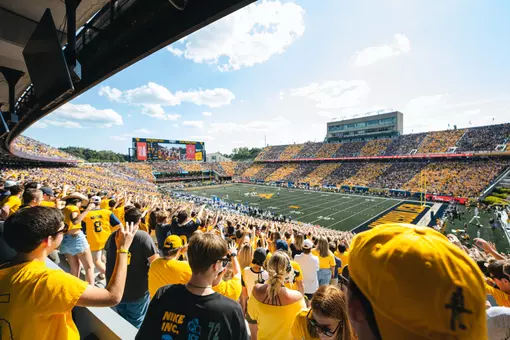
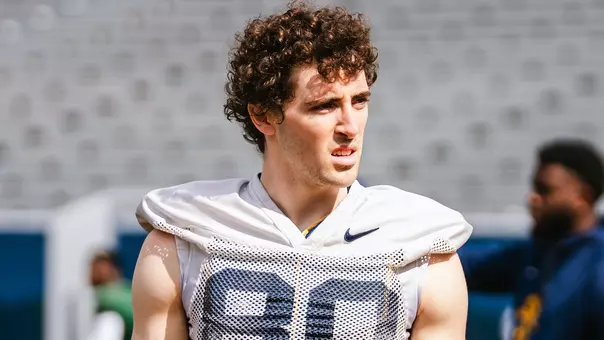
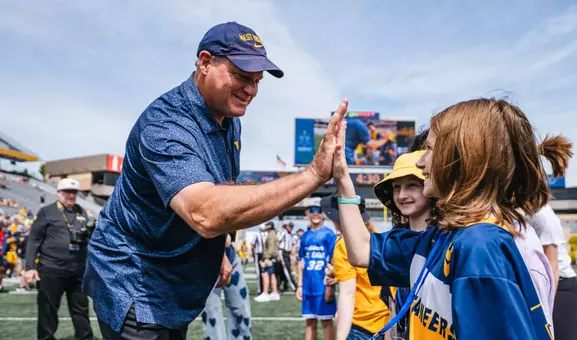
Gold-Blue Spring Festival Fan Recap
Sunday, April 19
John Neider | April 18
Saturday, April 18
Coach Zac Alley | April 18
Saturday, April 18
Coach Rich Rodriguez | April 18
Saturday, April 18