'I was happy for the program as much as I was for me': 1987 All-American Talks Career, Current Trajectory of WVU Wrestling
June 17, 2026 09:44 AM | Wrestling
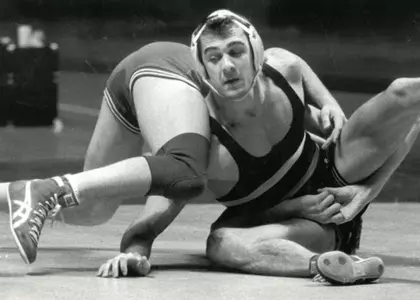
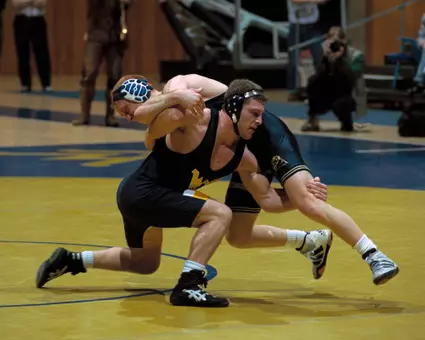
Jim Akerly wrestled for the Mountaineers in the 1980s, becoming the program's second All-American in 1987.
MORGANTOWN, W.Va. — It's one thing to wrestle at the collegiate level for four seasons. It's another thing to wrestle for that long at West Virginia University after initially joining the program as a walk-on.
Jim Akerly wrestled for the Mountaineers in the 1980s under longtime coach Craig Turnbull. That was before Turnbull churned out multiple All-Americans and five individual national champions over the course of a 36-year career at WVU.
The walk-on wrestler from Erie, Pennsylvania, was in the early stages of a career that would be historic once it was over at WVU, and like Akerly, this was also the early stages of WVU wrestling.
"My freshman year of college was the most fun year of wrestling I had in my life," Akerly said. "It was mostly because of my teammates and the leadership. I was proud to wear that singlet. Especially after I was on campus, and I met the students from across the state.
The students there were proud to be West Virginians. I was proud to represent them, and I wanted to."
Akerly would go on to win a program record 119 matches by the time he finished at WVU in 1988. This record stood until the early 2000s, and he still ranks fourth all-time in program history for individual wins.

Akerly would also become just the second All-American for the Mountaineers in the modern era of college wrestling, accomplishing the feat in 1987. He was also the first WVU wrestler to qualify for three NCAA Championships and is just one of 34 Mountaineers to do so.
"I was a walk-on," Akerly said. "All through high school, I was better than average, but I didn't finish well at the end of the season. This was the first time I won something or achieved something that was meaningful. It was even better that it was at West Virginia."
Akerly was just the beginning of West Virginia's success at the NCAA Wrestling Championships. Beginning with that All-America run in 1987, WVU registered an All-American at the NCAA Championships in all but four seasons through 2000.
This streak included two individual national champions — Scott Collins in 1991 and Dean Morrison in 1994.
Years later, Akerly recognizes what his accomplishment meant not only for him, but also for an emerging program like West Virginia.
"I was happy for the program as much as I was for me," Akerly said. "We were trending in the right direction. We were becoming competitive with recruits because we were getting things done. Guys were going there and proving it."
Akerly and wrestlers during his time at WVU laid the foundation for what the program has become. Since joining the Big 12 Conference, the Mountaineers have steadily risen to become a contender within the conference and at the national level. That rise is credited to coach Tim Flynn and what he and his staff have accomplished in eight seasons.
"I think we're blessed," Akerly said. "If Tim Flynn was a college football coach, he'd be recognized as a Bobby Bowden-type of guy because he wrestled at Penn State and also coached at a small university. He coached at Edinboro, and he had Edinboro on the podium as a team a couple of times."

In the last four seasons, West Virginia has won 41 duals and has placed sixth or higher at the Big 12 Wrestling Championships in each of the past three years. Akerly credits much of this success to the culture Flynn and his staff have built.
"They work really well as a group, and they've been together as a group for a long time," Akerly said. "They know what they're doing. I was down there at seven in the morning once, and there is coach Flynn at the other end of the room with two guys at seven o'clock in the morning working with them. That doesn't happen everywhere."
West Virginia's accomplishments are not limited to the regular season and within the conference. The Mountaineers have also made a name for themselves at the national level, producing seven consecutive seasons with an All-American for the first time in program history.
Akerly recognizes the focus Flynn has for his wrestlers on the mat, but also for what they do off the mat.
"He treats his athletes like human beings," Akerly said about Flynn. "He wants them to win on the mat, but he also wants them to win in life. He works with them on those things as much as he does on finishing a takedown."
West Virginia University Athletics has undergone significant changes throughout the decades, and West Virginia wrestling has benefited greatly from those changes with the WVU Pavilion in 2007, the Clark Mountaineer Club at Hope Coliseum and the Athletics Performance Center (APC) in 2022.
The APC provides a home for strength and conditioning, training, rehabilitation and nutrition for all WVU Olympic sport programs. Something like that did not exist when Akerly wrestled as a Mountaineer. "I think our facilities are great," Akerly said. "It's changed dramatically. We had a 20x50 room when I was there, and they called it the weight room. The training room, my first two years, you had to go to the Coliseum, go downstairs and wait for the basketball team to finish to get treatment. The weight room is beautiful now."
Even with those benefits, Akerly still points to the love and traditions that make West Virginia University unique. He says Flynn and his staff embrace those traditions and that they've become fully ingrained with WVU despite not being from the state or attending the university.
"I think they've gotten infected by being a Mountaineer," Akerly said. "They bleed gold and blue, too. Cliff Moore wrestled at Iowa, Mitchell Port wrestled at Edinboro, but they're Mountaineers now. They know the traditions."
Jim Akerly wrestled for the Mountaineers in the 1980s under longtime coach Craig Turnbull. That was before Turnbull churned out multiple All-Americans and five individual national champions over the course of a 36-year career at WVU.
The walk-on wrestler from Erie, Pennsylvania, was in the early stages of a career that would be historic once it was over at WVU, and like Akerly, this was also the early stages of WVU wrestling.
"My freshman year of college was the most fun year of wrestling I had in my life," Akerly said. "It was mostly because of my teammates and the leadership. I was proud to wear that singlet. Especially after I was on campus, and I met the students from across the state.
The students there were proud to be West Virginians. I was proud to represent them, and I wanted to."
Akerly would go on to win a program record 119 matches by the time he finished at WVU in 1988. This record stood until the early 2000s, and he still ranks fourth all-time in program history for individual wins.
Akerly would also become just the second All-American for the Mountaineers in the modern era of college wrestling, accomplishing the feat in 1987. He was also the first WVU wrestler to qualify for three NCAA Championships and is just one of 34 Mountaineers to do so.
"I was a walk-on," Akerly said. "All through high school, I was better than average, but I didn't finish well at the end of the season. This was the first time I won something or achieved something that was meaningful. It was even better that it was at West Virginia."
Akerly was just the beginning of West Virginia's success at the NCAA Wrestling Championships. Beginning with that All-America run in 1987, WVU registered an All-American at the NCAA Championships in all but four seasons through 2000.
This streak included two individual national champions — Scott Collins in 1991 and Dean Morrison in 1994.
Years later, Akerly recognizes what his accomplishment meant not only for him, but also for an emerging program like West Virginia.
"I was happy for the program as much as I was for me," Akerly said. "We were trending in the right direction. We were becoming competitive with recruits because we were getting things done. Guys were going there and proving it."
Akerly and wrestlers during his time at WVU laid the foundation for what the program has become. Since joining the Big 12 Conference, the Mountaineers have steadily risen to become a contender within the conference and at the national level. That rise is credited to coach Tim Flynn and what he and his staff have accomplished in eight seasons.
"I think we're blessed," Akerly said. "If Tim Flynn was a college football coach, he'd be recognized as a Bobby Bowden-type of guy because he wrestled at Penn State and also coached at a small university. He coached at Edinboro, and he had Edinboro on the podium as a team a couple of times."
In the last four seasons, West Virginia has won 41 duals and has placed sixth or higher at the Big 12 Wrestling Championships in each of the past three years. Akerly credits much of this success to the culture Flynn and his staff have built.
"They work really well as a group, and they've been together as a group for a long time," Akerly said. "They know what they're doing. I was down there at seven in the morning once, and there is coach Flynn at the other end of the room with two guys at seven o'clock in the morning working with them. That doesn't happen everywhere."
West Virginia's accomplishments are not limited to the regular season and within the conference. The Mountaineers have also made a name for themselves at the national level, producing seven consecutive seasons with an All-American for the first time in program history.
Akerly recognizes the focus Flynn has for his wrestlers on the mat, but also for what they do off the mat.
"He treats his athletes like human beings," Akerly said about Flynn. "He wants them to win on the mat, but he also wants them to win in life. He works with them on those things as much as he does on finishing a takedown."
West Virginia University Athletics has undergone significant changes throughout the decades, and West Virginia wrestling has benefited greatly from those changes with the WVU Pavilion in 2007, the Clark Mountaineer Club at Hope Coliseum and the Athletics Performance Center (APC) in 2022.
The APC provides a home for strength and conditioning, training, rehabilitation and nutrition for all WVU Olympic sport programs. Something like that did not exist when Akerly wrestled as a Mountaineer.
Even with those benefits, Akerly still points to the love and traditions that make West Virginia University unique. He says Flynn and his staff embrace those traditions and that they've become fully ingrained with WVU despite not being from the state or attending the university.
"I think they've gotten infected by being a Mountaineer," Akerly said. "They bleed gold and blue, too. Cliff Moore wrestled at Iowa, Mitchell Port wrestled at Edinboro, but they're Mountaineers now. They know the traditions."
Saturday, October 10
Thursday, October 01
Wednesday, August 19
Monday, August 03