Baseball Season No. 129 Opens This Friday in Statesboro, Georgia
February 14, 2023 04:46 PM | Baseball, Blog
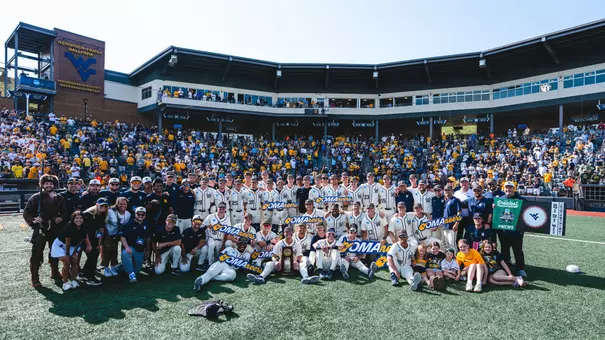
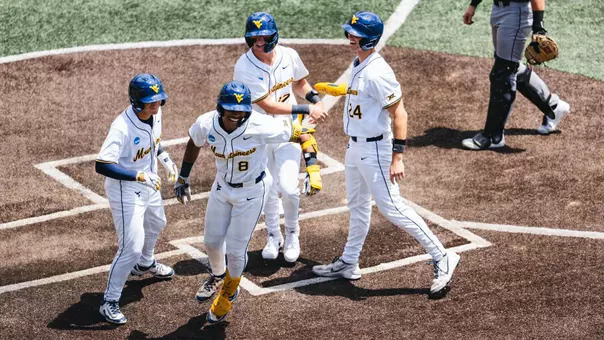
MORGANTOWN, W.Va. – The 129th season of West Virginia University baseball begins this Friday when Randy Mazey’s Mountaineers travel to Statesboro, Georgia, to face Georgia Southern in a three-game series.
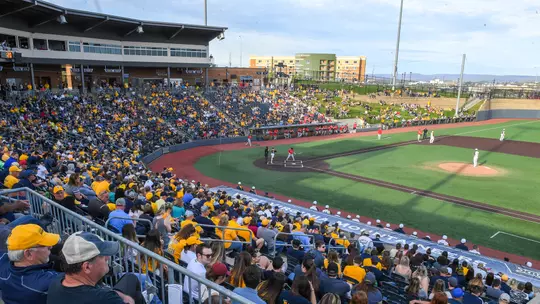
Mazey, now in his 12th season as skipper, has overseen the revitalization of WVU’s second-oldest program from its acceptance into a power conference in 2013 to the stewardship of a beautiful new ballpark that overlooks the Monongahela River and greater Morgantown.
What Mazey has done in his 11 seasons at WVU against the competition he’s faced shouldn’t be taken lightly.
I know.
I’ve spent the last five years researching the history of the program for inclusion in our statistical website, WVUstats.com. The baseball portion is now online, although still incomplete. We’ve just finished up 1920 and are venturing back to the Ira Errett Rodgers years and prior.
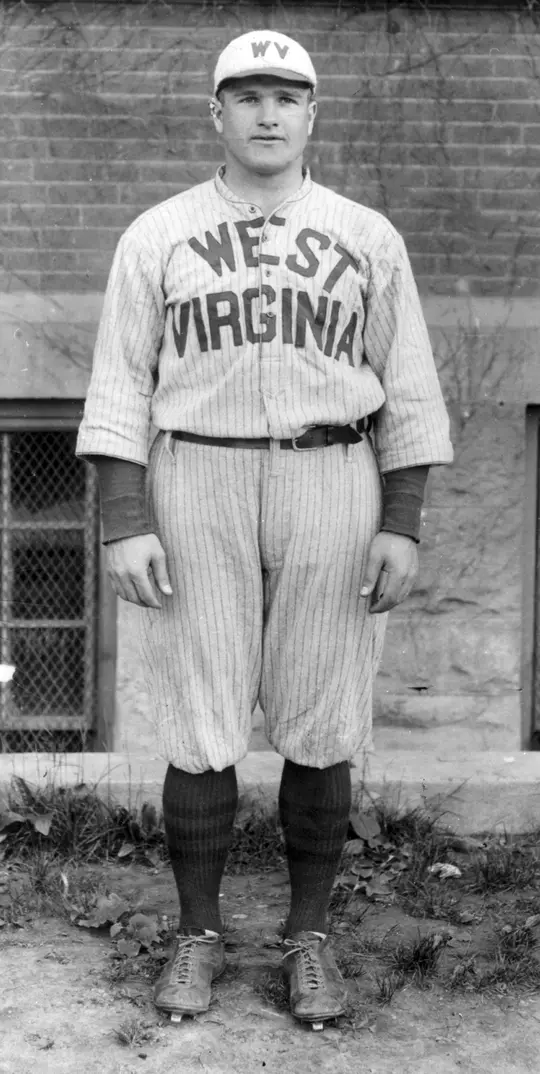
Speaking of Rodgers, did you realize that he may have been an even better baseball player than he was a football player? That’s saying something considering he was one of 22 players listed on college football’s all-time 100th anniversary team in 1969!
After once watching him play a baseball game in Pittsburgh, the great Connie Mack offered Rodgers a no-cut pro contract on the spot, but Rat declined, preferring to return to WVU to become a professor and coach. Although Rodgers often moonlighted with local pro teams to make a few extra bucks - once playing for four different teams against West Virginia in 1920 alone – his heart was always in Morgantown, West Virginia. And he never left, dying in the University Hospital on Feb. 22, 1963, at age 67.
Rodgers didn’t enjoy great success as WVU's baseball coach, losing 10 more games than he won during his 23 seasons from 1921 until 1946, but he was a loyal, dedicated servant to West Virginia University and was considered a living legend to anyone he ever encountered.
West Virginia’s most successful coach was Steve Harrick, one of six Harricks from Punxsutawney, Pennsylvania, to play at WVU. However, older brother, Joe, was the better of the two on the diamond.
Steve wasn’t too bad either, the speedy centerfielder hitting .269 and swiping 22 bases in 97 career games for the Mountaineers from 1921 to 1924.
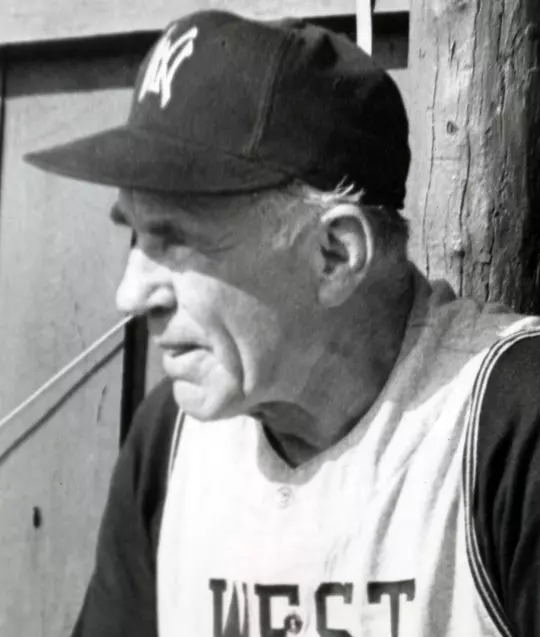
As West Virginia’s baseball coach, Harrick had an impressive .674 winning percentage from 1948 until 1967, leading West Virginia to NCAA Tournament appearances in 1948, 1955, 1961, 1962, 1963, 1964 and 1967. Harrick was considered a brilliant tactician and an outstanding fundamental coach who developed dominant pitching staffs. His run of great arms began with Okey Ryan in 1948 and continued in the 1950s with Jim Heise and Paul Chuma.
Tom Shafer, Wendell Backus, John Radosevich, Vaughn Kovach and Jerry Meadows came on the scene in the 1960s when Harrick had one of the best college baseball programs in the country. Those guys are considered among the best to ever toe the rubber for the Mountaineers.
There were no pitch counts in those days and Harrick wasn’t against bringing in his aces on no rest late in close games to sew up victories. Saves weren’t recorded, but Heise, Chuma and Radosevich had a bunch of them during their careers.
Radosevich, the first WVU player ever drafted in 1965, once outdueled righthander Joe Niekro in a 4-3 victory at Bethany College on April 11, 1965, by fanning 17 West Liberty batters and allowing only three hits and two earned runs. The Hilltoppers were the defending NAIA national champions and were an annual mid-week nemesis for the Mountaineers.
Of course, when discussing great Mountaineer arms, you must include Chris Enochs and Alek Manoah – both power pitchers who really blossomed when they mastered their secondary pitches. Enochs was destined to be where Manoah is today if not for a shoulder injury in Double-A that effectively ended his pro career.
Both were taken as the 11th overall picks in the first round of the Major League Draft, Enochs in 1997 and Manoah 22 years later.
As for mid-week foes, West Virginia regularly faced local small colleges during the weekdays in the 1940s, 1950s and 1960s to fill out its schedule. California, Pennsylvania, was a team that used to give West Virginia fits in the mid-week, as did West Virginia Wesleyan.
The Bobcats once beat the Mountaineers four straight times from 1959 until 1961 and won six of nine from 1956-61. The two haven’t played since April 28, 1967.
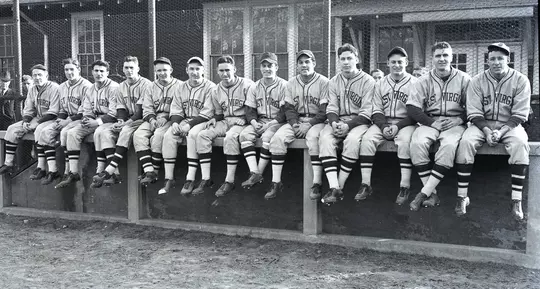
Did you know Bruce Clinton was generally regarded to be the first Black player in WVU history when he transferred from Potomac State College to play for the Mountaineers in 1976? However, Hector Napoleoni and Carlos Rodriguez of Ponce, Puerto Rico, played for the Mountaineers during the 1941 and 1942 seasons.
Rodriguez played 31 games over three seasons, including 10 in 1948 when the Mountaineers made their first-ever NCAA Tournament appearance. Carlos is pictured below with the 1941 squad, sitting fifth from the right.
The best hitter in school history?
Jedd Gyorko? Darrell Whitmore? Mark Landers? Tyler Kuhn? Darius Hill?
Well, statistically, it was infielder Herb Stewart, from Wheeling, who batted .474 in 41 career games from 1933-35. He hit .494 during his senior year in 1935 with nearly half of his hits of the extra base variety. He went hitless in just three games during his college career.
Herbert “Babe” Barna was a tremendous hitter, too.
The Babe once led the American Association in home runs and played parts of five seasons in the big leagues in the 1940s when there were only 16 teams in the majors. He was also an amazing athlete who once swiped a school-record five stolen bases against St. Vincent College on May 22, 1937.
Speaking of athletes, 1940 team captain Earl Anderson was one of the best to ever patrol the outfield of the old Athletic Field. The speedy Anderson used to run up the bank and onto Maiden Lane in front of Stalnaker Hall to track down fly balls.
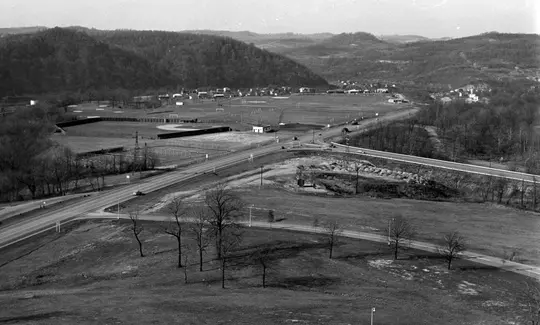
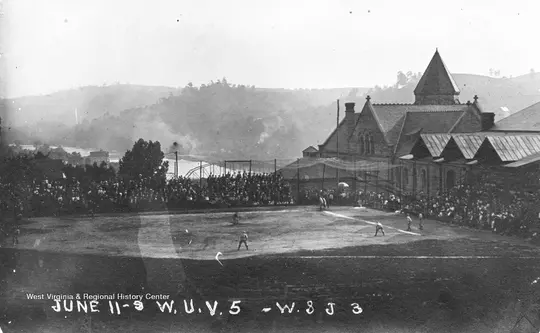
The Athletic Field was located where the MountainLair sits today and doubled as the University’s ROTC field, which meant ground balls and fly balls were always an adventure. The dimensions were far from proportional, too, with it being roughly 250 feet down the left field line and about 475 feet to right center where the chemistry building was located.
That’s one reason why there were far more triples than home runs there, not to mention the wooden bats and the softer baseballs that were used at the time. Evansdale Field, which became known as Hawley Field when director of athletics Roy “Legs” Hawley died of a heart attack in 1954, also had big dimensions and was a difficult place to hit home runs.
Paul Popovich hit the most – four during his one season playing for the Mountaineers in 1960 before signing a $42,000 contract with the Chicago Cubs – a lot of money for a Flemington boy at that time.
The second Hawley Field came about in 1971 after the first one was seized to make room for the WVU Coliseum.
But back to Anderson. He is one of the greatest Mountaineers about whom you’ve never heard. Not only was he a very good college baseball player, hitting .340 during his senior season and .290 for his Mountaineer career, but he was also a true American hero as one of the most decorated soldiers in our state’s history.
Did you know that he became a four-star general in the Marine Corps and is currently buried in Arlington National Cemetery? He received 49 citations during his 35 years of military service, including the Navy Distinguished Service Medal.
In 1970, he was appointed as the USMC member of the United States Olympic Committee and a year later, was designated by the Secretary of Defense as the United States member of the executive committee of the Conseil International du Sport Militaire.
He also earned a Purple Heart after spending seven hours in the Pacific Ocean during the Battle of the Coral Sea when the aircraft carrier Yorktown was hit with enemy fire.
“In those days, I was commanding a battery of twin 37-millimeter, anti-aircraft guns on the starboard side,” he recalled in 2014, a year before his death. “I started down the rope when the order came to abandon ship, and I got hit in the head with something.
“I didn’t have much fear in those days, but I was certainly concerned when it was getting dark,” he continued. “People say, ‘What about the sharks?’ Hell, they dopped so many bombs and launched so many torpedoes no sharks would want to come around all of that!”
Yes, this guy played baseball for the West Virginia Mountaineers! Do yourself a favor and Google his name sometime.
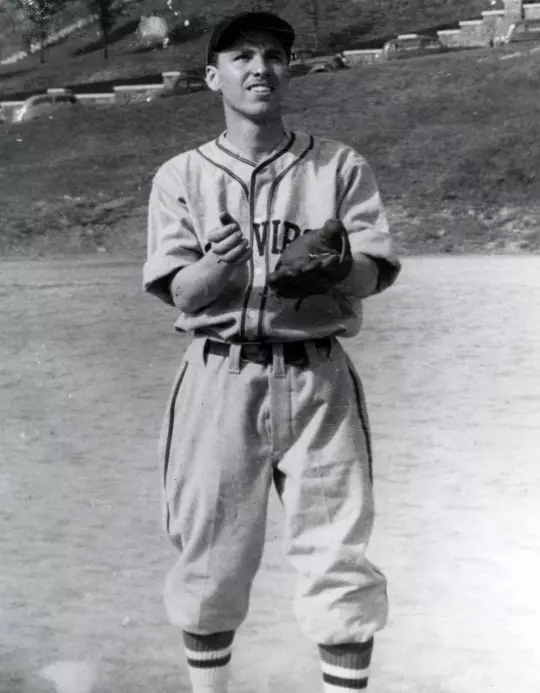
There have been nine no-hit games in school history, beginning with Kester June’s five-inning blanking of the Pittsburgh Independents on April 27, 1917. The next one came 53 years later on April 11, 1970, when right hander Jim Mavroleon held Virginia Tech hitless in seven innings at Hawley Field.
I happened to be the official scorer for the only nine-inning, no-hitter in school history when Huntington’s Jason Hively blanked George Washington on May 1, 1994.
I had to make a controversial decision in the ninth inning when shortstop Andy Srebroski mishandled a slow roller that I ruled an error, thus preserving Hively’s no-hitter. It was the only time Andy never complained about an error, but I did draw the ire of GW coach Jay Murphy when he found out that I was the one who made the call while we were swapping baseball stories in the hospitality room at the Atlantic 10 Tournament later that year.
It was either hear it from Jay Murphy or Dale Ramsburg, and I was never going to disappoint the Rammer!
Officially, there were just four occasions when West Virginia was no-hit in games. One happened on April 26, 1926, when Georgetown’s Pete Burch tossed a nine-inning, no-no on Georgetown’s Hilltop Field. Another came 10 years later when Salem College’s Ed Summers blanked the Mountaineers in seven innings at East Salem Field on May 13, 1936.
Penn State’s Mitch Lukevics shut down West Virginia in seven innings on April 23, 1975, at Beaver Field, and the last one was also seven innings against Marietta College on March 20, 1982, at Pioneer Park in Marietta, Ohio.
Three different Marietta pitchers – Roger Hart, Steve Riley and Steve Yurchak – combined for the no-hitter, but the Mountaineers actually scored an unearned run against Hart before he was lifted in the sixth. It was officially recorded as a 3-1 Marietta victory in the record books.
There was probably another no-hitter registered against West Virginia on April 30, 1920, when Vermont’s “Lefty” Duda blanked the Mountaineers 1-0, but WVU athletic director/publicist Harry Stansbury gave Wesley Dorsey a hit and then raced to get the results out to the wire services. In the Saturday, May 1, 1920, editions of the Washington Post and New York Times, the story mentions Duda’s one-hit blanking of the Mountaineers.
In the local Burlington (Vermont) Free Press, however, subscribers that morning read all about Duda’s great no-hitter!
The greatest multi-sport baseball players in school history?
Rat Rodgers? Babe Barna? Sam Huff? Fred Wyant? Bucky Bolyard? Ronnie Retton? Rod Thorn? Fulton Walker? Darrell Whitmore? There are too many to count.
I remember Sam Huff once bragging to me about what a great catcher he was for the Mountaineers and I believed him until I saw that he batted like .150 during the one full season he played in 1954. I think becoming middle linebacker for the New York Giants was the wiser choice!
Greatest opposing two-sport players? Illinois pitcher Ray Nitschke was not too shabby on the diamond. The flame-throwing right-hander limited West Virginia to just four runs over eight innings in a 9-4 Illini victory in Tallahassee, Florida, on March 30, 1956.
NC State’s Roman Gabriel was pretty good as well. The Wolfpack centerfielder had two hits and knocked in a pair of runs in State’s 9-8 win over West Virginia at Riddick Stadium in Raleigh, North Carolina, on April 3, 1961.
If you are looking for great opposing players, Ohio University’s Mike Schmidt is a good place to start. The Hall of Famer opposed the Mountaineers at Ohio’s Trautwein Field on April 12, 1971.
In the 1985 NCAA Tournament, West Virginia faced a loaded Mississippi State team that included Bobby Thigpen, Rafael Palmiero, Will Clark and Jeff Brantley, and the following day took on a Michigan squad that included shortstop Barry Larkin.
Naturally, WVU was two and barbeque in that tournament.
A couple years later, West Virginia made another NCAA regional trip to Huntsville, Alabama, where the Mountaineers met Clemson at Joe Davis Stadium. Playing centerfield that afternoon for the Tigers was a guy named Randy Mazey, which I guess brings this article full circle.
Opening the season in Statesboro, Georgia, sort of brings my association with college baseball full circle, too. A long bus ride to Statesboro way back in 1992 was among my earliest trips with the Mountaineers, and after a couple of bottles of Gatorade and several visits to the toilet in the back of the bus, the remainder of my trip to Georgia was spent sitting on top the toilet seat.
That’s because some of the players felt the urge to seal the door shut with trainer’s tape to keep me from getting out. For those unaware, baseball players are among the smelliest people on the planet.
That was three hours of my life that I’ll never get back.
Nevertheless, here’s to another memorable season of West Virginia University baseball!