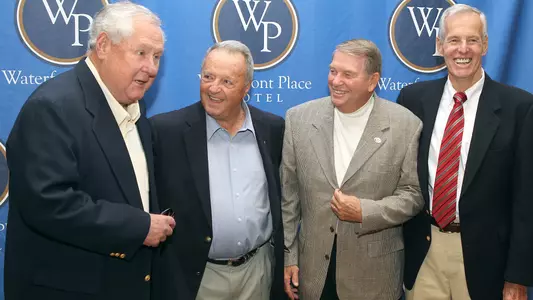
Photo by: Greg Hunter, Blue/Gold News
The Late Jim Carlen Was Responsible for Bringing Bobby Bowden to West Virginia
August 09, 2021 04:45 PM | Football, Blog
MORGANTOWN, W.Va. – Have you ever wondered how Alabama native Bobby Bowden ended up at West Virginia University in the first place?
Bowden, who died yesterday morning in his Tallahassee, Florida, home following a brief bout with pancreatic cancer, was a lifelong resident of the Deep South before coming to West Virginia in 1966 when coach Jim Carlen got the head coaching job.
Looking to get a break in Division I football, Bowden joined Bill Peterson's Florida State staff in 1962 as wide receivers coach, and it was during his time there when Bowden first met Jim Carlen, Georgia Tech's young defensive coordinator. Carlen, who died in 2012, explained how he first met Bowden when Bobby was eager to get more responsibility and rise in the coaching ranks.
"He's a Birmingham boy, and he went to a small college in Alabama, and he was more tied to Alabama than he was Auburn," Carlen recalled in 2009. "I met him at a clinic. I did not really spend a lot of time with him, but I realized right away that he was my kind of coach – real strong Christian Baptist, good family man, and I also realized he had the ability to recruit because he was so personable and he got along with everybody."
Bowden was stored in the back of Carlen's mind when he recalled once sitting in a room with legendary coaches Bear Bryant and Bobby Dodd and listening to them talk about the passing game like it was some sort of disease.
Carlen realized if passing the football was so troubling to them, it was something he wanted to pursue if he ever got a head coaching job.
"I knew the game was going to change a little bit if they could ever get to where they could let the offensive line block like they are letting them do now – tackle them!" Carlen said. "I said, 'If I ever get a head job we're going to have a throwing attack of some kind.'"
 Carlen eventually got his head coaching opportunity in early 1966 when Gene Corum was let go and athletic director Red Brown was looking for a young, energetic coach to revitalize the Mountaineer football program.
After picking off a couple of Dodd's young Georgia Tech assistant coaches, Carlen zeroed in on Bowden, who was becoming frustrated with the limited opportunities he was getting at Florida State. Bowden wanted to be in charge of the offense, and he was also looking for a job that would eventually give him a clearer path toward becoming a Division I coach.
When Carlen got wind that Shug Jordan was also pursuing Bowden for Auburn's offensive coordinator position, he began recruiting Bobby just as hard as he later recruited Heisman Trophy winner George Rogers when he coached at South Carolina.
Carlen promised Bowden complete control of West Virginia's offense.
"What I knew about Bobby was I knew he knew the throwin' game, and I knew he was kind of a fool-'em coach," Carlen said. "He ran trick plays and stuff. My whole system was run the veer and the wishbone and run the ball all the time. I had just never been around the throwin' game."
The pair worked well together at West Virginia, and Carlen let Bowden use some of his trick plays, but there were also times when he wouldn't.
There was an instance during one game when the Mountaineers were comfortably ahead and Bowden wanted to call a halfback pass but Carlen wouldn't let him. And, during the preparations leading up to the Peach Bowl, Carlen literally had to force Bowden to call Texas coach Darrell Royal and learn the wishbone before the Mountaineers faced South Carolina in Atlanta.
"He didn't want to do it, and I said, 'Bobby, we're going to do it. We've got running backs here,'" Carlen recalled. "We could go from a two-back offense, a split-back, to a three-back offense. We had a lot of good running backs. (Eddie) Williams was our second-team tailback and we moved him to Y back. He ended up gaining 200 yards in that game in the rain and Paul Deitzel at South Carolina thought we were going to run the divide back."
Carlen's Trojan Horse strategy for the Peach Bowl was nearly exposed by Morgantown Post reporter Tony Constantine, a frequent practice goer. Tony knew enough about football to realize that West Virginia was cooking up a different recipe for the Gamecocks.
"Tony Constantine, bless his heart, he would come to practice and after one practice, he walked into my office and said, 'Coach, you are doing something different,'" Carlen recalled. "I said, 'What are you talking about Tony?' He said, 'What are you working three people in the backfield for?' I said, 'Well, they need working. I want their legs to be in good shape. If they're standing on the sideline watching they won't be in good shape.'"
Constantine wasn't buying it.
"Coach, I believe that is the wishbone that you're running," he said.
"Now Tony, I know you're not very big size-wise, but I'll shave your head bald if you even mention this to your wife!" Carlen told him.
Constantine kept the wishbone to himself, and it completely caught South Carolina off guard, leading to West Virginia's 14-3 upset victory. In the meantime, Carlen was growing impatient with his situation at West Virginia and was in advanced negotiations with Texas Tech to become its new football coach when the Mountaineers were beating South Carolina in the Peach Bowl.
Two days later he was in Lubbock, Texas, talking about his new job with the Red Raiders.
Carlen didn't keep Bowden in the loop because he figured Bowden was going to be the top candidate to replace him at West Virginia, and he knew Bobby would try and recruit some of the assistant coaches that he wanted to take with him to Texas Tech.
"You never want to appoint a man to replace you because that will come back to bite you," Carlen recalled. "Now if they want to fire you, fine. If they've got their coach in mind and he happens to be on your staff, fine."
When word got out that Carlen was leaving, boosters across the state were raging mad that West Virginia had not done more to try and keep him. Hiring Bowden so quickly placated some of the angst but not all of it.
"If they hadn't selected Bobby so soon, they'd really have been in trouble up there," the late Dick Hudson, Charleston Daily Mail sports editor, once recalled.
"Had the popular Bowden decided to go with the Deacon (a nickname Carlen received for his willingness to espouse his religious beliefs), the roof would have really fallen in on WVU officials," Charleston Gazette sports editor Shorty Hardman wrote at the time. "The protests, already of mammoth proportions, probably would have amounted to something like a revolution.
"Bobby was the one guy to save their hides, and he was elevated to the post almost as soon as Carlen left," Hardman wrote. "The little Alabaman is, indeed, as popular as Carlen with West Virginians."
Of course, Bowden's popularity with West Virginians had its limits, which he would find out during his six years as the Mountaineers' head football coach from 1970-75.
For his part, Carlen had no idea that Bobby Bowden would become one of the all-time great coaches in college football history.
"In the beginning, Bobby wasn't a detail man and he wasn't a disciplinarian," Carlen explained. "Now (wife) Ann doesn't take any guff. She's as tough as a boot and she doesn't back off a step. I didn't know Ann that well, but I could tell she was a doer. She came to Morgantown, and they ended up starting that Baptist church up there."
Ultimately, Carlen believed Bowden's great success at Florida State was tied to the tremendous players he recruited to Tallahassee over the years.
"It always goes back to who has the best players?" Carlen admitted. "Players win games. I used to tell my people, 'Now, we've been to three different places and I've learned one lesson: If I get another coaching job, I'm taking the players and I'm leaving y'all here.'"
Bowden, who died yesterday morning in his Tallahassee, Florida, home following a brief bout with pancreatic cancer, was a lifelong resident of the Deep South before coming to West Virginia in 1966 when coach Jim Carlen got the head coaching job.
Looking to get a break in Division I football, Bowden joined Bill Peterson's Florida State staff in 1962 as wide receivers coach, and it was during his time there when Bowden first met Jim Carlen, Georgia Tech's young defensive coordinator. Carlen, who died in 2012, explained how he first met Bowden when Bobby was eager to get more responsibility and rise in the coaching ranks.
"He's a Birmingham boy, and he went to a small college in Alabama, and he was more tied to Alabama than he was Auburn," Carlen recalled in 2009. "I met him at a clinic. I did not really spend a lot of time with him, but I realized right away that he was my kind of coach – real strong Christian Baptist, good family man, and I also realized he had the ability to recruit because he was so personable and he got along with everybody."
Bowden was stored in the back of Carlen's mind when he recalled once sitting in a room with legendary coaches Bear Bryant and Bobby Dodd and listening to them talk about the passing game like it was some sort of disease.
Carlen realized if passing the football was so troubling to them, it was something he wanted to pursue if he ever got a head coaching job.
"I knew the game was going to change a little bit if they could ever get to where they could let the offensive line block like they are letting them do now – tackle them!" Carlen said. "I said, 'If I ever get a head job we're going to have a throwing attack of some kind.'"
Carlen eventually got his head coaching opportunity in early 1966 when Gene Corum was let go and athletic director Red Brown was looking for a young, energetic coach to revitalize the Mountaineer football program.After picking off a couple of Dodd's young Georgia Tech assistant coaches, Carlen zeroed in on Bowden, who was becoming frustrated with the limited opportunities he was getting at Florida State. Bowden wanted to be in charge of the offense, and he was also looking for a job that would eventually give him a clearer path toward becoming a Division I coach.
When Carlen got wind that Shug Jordan was also pursuing Bowden for Auburn's offensive coordinator position, he began recruiting Bobby just as hard as he later recruited Heisman Trophy winner George Rogers when he coached at South Carolina.
Carlen promised Bowden complete control of West Virginia's offense.
"What I knew about Bobby was I knew he knew the throwin' game, and I knew he was kind of a fool-'em coach," Carlen said. "He ran trick plays and stuff. My whole system was run the veer and the wishbone and run the ball all the time. I had just never been around the throwin' game."
The pair worked well together at West Virginia, and Carlen let Bowden use some of his trick plays, but there were also times when he wouldn't.
There was an instance during one game when the Mountaineers were comfortably ahead and Bowden wanted to call a halfback pass but Carlen wouldn't let him. And, during the preparations leading up to the Peach Bowl, Carlen literally had to force Bowden to call Texas coach Darrell Royal and learn the wishbone before the Mountaineers faced South Carolina in Atlanta.
"He didn't want to do it, and I said, 'Bobby, we're going to do it. We've got running backs here,'" Carlen recalled. "We could go from a two-back offense, a split-back, to a three-back offense. We had a lot of good running backs. (Eddie) Williams was our second-team tailback and we moved him to Y back. He ended up gaining 200 yards in that game in the rain and Paul Deitzel at South Carolina thought we were going to run the divide back."
Carlen's Trojan Horse strategy for the Peach Bowl was nearly exposed by Morgantown Post reporter Tony Constantine, a frequent practice goer. Tony knew enough about football to realize that West Virginia was cooking up a different recipe for the Gamecocks.
"Tony Constantine, bless his heart, he would come to practice and after one practice, he walked into my office and said, 'Coach, you are doing something different,'" Carlen recalled. "I said, 'What are you talking about Tony?' He said, 'What are you working three people in the backfield for?' I said, 'Well, they need working. I want their legs to be in good shape. If they're standing on the sideline watching they won't be in good shape.'"
Constantine wasn't buying it.
"Coach, I believe that is the wishbone that you're running," he said.
"Now Tony, I know you're not very big size-wise, but I'll shave your head bald if you even mention this to your wife!" Carlen told him.
Constantine kept the wishbone to himself, and it completely caught South Carolina off guard, leading to West Virginia's 14-3 upset victory. In the meantime, Carlen was growing impatient with his situation at West Virginia and was in advanced negotiations with Texas Tech to become its new football coach when the Mountaineers were beating South Carolina in the Peach Bowl.
Two days later he was in Lubbock, Texas, talking about his new job with the Red Raiders.
Carlen didn't keep Bowden in the loop because he figured Bowden was going to be the top candidate to replace him at West Virginia, and he knew Bobby would try and recruit some of the assistant coaches that he wanted to take with him to Texas Tech.
"You never want to appoint a man to replace you because that will come back to bite you," Carlen recalled. "Now if they want to fire you, fine. If they've got their coach in mind and he happens to be on your staff, fine."
When word got out that Carlen was leaving, boosters across the state were raging mad that West Virginia had not done more to try and keep him. Hiring Bowden so quickly placated some of the angst but not all of it.
"If they hadn't selected Bobby so soon, they'd really have been in trouble up there," the late Dick Hudson, Charleston Daily Mail sports editor, once recalled.
"Had the popular Bowden decided to go with the Deacon (a nickname Carlen received for his willingness to espouse his religious beliefs), the roof would have really fallen in on WVU officials," Charleston Gazette sports editor Shorty Hardman wrote at the time. "The protests, already of mammoth proportions, probably would have amounted to something like a revolution.
"Bobby was the one guy to save their hides, and he was elevated to the post almost as soon as Carlen left," Hardman wrote. "The little Alabaman is, indeed, as popular as Carlen with West Virginians."
Of course, Bowden's popularity with West Virginians had its limits, which he would find out during his six years as the Mountaineers' head football coach from 1970-75.
For his part, Carlen had no idea that Bobby Bowden would become one of the all-time great coaches in college football history.
"In the beginning, Bobby wasn't a detail man and he wasn't a disciplinarian," Carlen explained. "Now (wife) Ann doesn't take any guff. She's as tough as a boot and she doesn't back off a step. I didn't know Ann that well, but I could tell she was a doer. She came to Morgantown, and they ended up starting that Baptist church up there."
Ultimately, Carlen believed Bowden's great success at Florida State was tied to the tremendous players he recruited to Tallahassee over the years.
"It always goes back to who has the best players?" Carlen admitted. "Players win games. I used to tell my people, 'Now, we've been to three different places and I've learned one lesson: If I get another coaching job, I'm taking the players and I'm leaving y'all here.'"
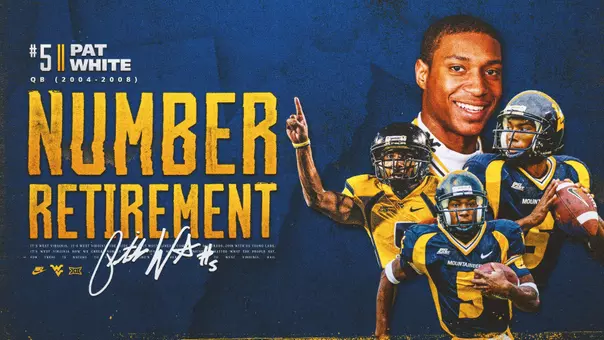

A Special Announcement for No. 5 Pat White
Friday, June 05
NCAA Super Regional (Steve Sabins, Chansen Cole, Tyrus Hall) - WVU Baseball | June 5
Friday, June 05
Pat White No. 5 Retirement
Friday, June 05
Gold-Blue Spring Festival Fan Recap
Sunday, April 19