WVU Athletics Facilities: An In-Depth Look, Part II
July 04, 2021 09:00 AM | General, Blog
Today, we detail all of the exciting facility improvements that have taken place since West Virginia made the move to the Big 12, including the accelerated pace current director of athletics Shane Lyons and WVU president Gordon Gee have adopted since Lyons assumed athletic leadership in 2015.
MORGANTOWN, W.Va. – On Friday, Oct. 28, 2011, the course of West Virginia University athletics changed dramatically. That’s the day the Big 12 Conference Board of Directors voted unanimously to accept West Virginia as a full-fledged member.
TCU was invited to join the Big 12 earlier that month and the two schools began competition in the fall of 2012. For West Virginia, that meant a massive amount of work was required to get its athletics facilities in line with the rest of the conference, including newbie TCU, which had utilized money from the Amon G. Carter Foundation to finance a $164 million improvement to its football stadium.
The eight other Big 12 institutions had a 16-year head start on West Virginia in terms of the additional revenues they received from their lucrative membership in the Big 12 Conference, which was in line with the schools in the SEC, Big Ten and Pac 12.
The programs in those conferences have made significant investments in their athletic facilities, and because of the huge revenue disparity that existed during the time West Virginia was in the Big East, earning $8 or $9 million per year, the Mountaineers have had to play catch up.
Oliver Luck’s first order of business was to figure out what he was going to do with Mountaineer baseball. In its current state, baseball was not going to be competitive in the Big 12 and a significant amount of money had to be invested in facilities for it to become competitive. He also knew swimming and diving’s antiquated, 37-year-old Natatorium was beyond repair and needed addressed, so he came up with a couple of unique arrangements to deal with these two pressing issues.
For baseball, a collaboration between West Virginia University and Monongalia County requiring state Legislature approval was established to construct $25 million Monongalia County Ballpark in the University Town Center development in Granville. TIF funding was utilized to finance this project, and its great success has opened the door to other proposed TIF projects in the city.
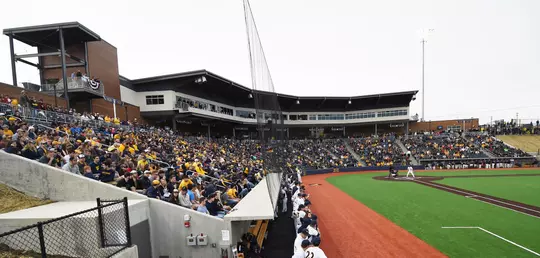
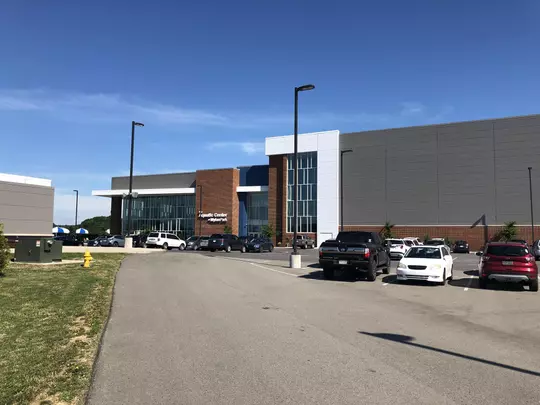
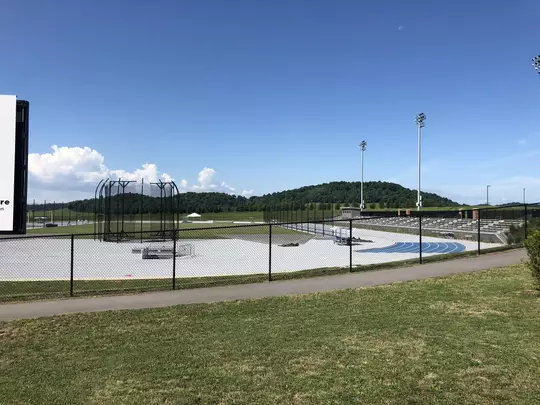
Luck also spearheaded a unique public/private partnership with Mylan Park, which included a $10 million contribution from the Hazel Ruby McQuain Charitable Trust, to build the $45 million Mountaineer Aquatic & Track Center.
Monongalia County Ballpark was officially dedicated during Shane Lyons’ first year as director of athletics in 2015, and Lyons oversaw the complicated details required to make the track and aquatic centers realities when both facilities were officially dedicated – the outdoor track on Oct. 26, 2018, and the aquatic center on Nov. 1, 2019.
All three venues have already paid off handsomely.
Baseball snapped a 20-year NCAA Tournament drought in 2017, and in 2019, the Mountaineers hosted an NCAA Tournament regional in Morgantown for the first time in 64 years. West Virginia also cracked the Top 25 in the USA Today coaches’ poll for the first time in the history of that poll.
The 90,000-square-foot aquatic center, with seating for 1,200 spectators, was the host site for the 2020 Big 12 Swimming & Diving Championships, and other regional and state competitions have already taken place in there as well to help stimulate the local economy.
The new outdoor track facility enabled freshman steeplechaser Ceili McCabe to qualify for this year’s NCAA regionals, and she took full advantage of that opportunity by placing sixth at NCAA nationals last month to become WVU’s first All-American track performer since 2017. In prior years, West Virginia’s steeplechasers had to drive to either Wheeling University or California, Pennsylvania, in order to get a workout because of the unsafe and inadequate outdoor track facilities on campus.
Since Jan. 5, 2015, when Gordon Gee appointed Lyons the University’s 12th director of athletics, facility improvements have taken on an accelerated pace, thanks to the vision and foresight exhibited by Lyons, Gee and the WVU Board of Governors.
“My focus and vision as athletics director coming in was facility enhancement,” Lyons admitted.
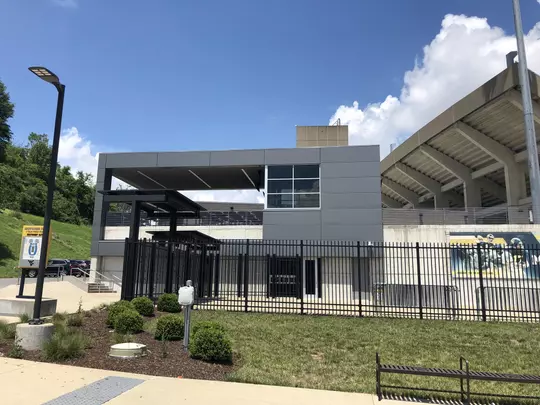
Immediately, Lyons picked up where Luck left off by overseeing the $55 million Milan Puskar Stadium concourse renovation project. Originally scheduled to be completed in one year, Lyons wisely chose to break the project up into two phases over two years to minimize disruptions to the home football season. The East concourse was completed in 2016 and the West concourse was finished prior to the 2017 season.
In conjunction with those two projects, Lyons also chose to remove Milan Puskar Stadium’s crown and improve the drainage system underneath the field before installing a new playing surface. A new video board was added in the north end zone to complement the south end zone video board, which also underwent an upgrade prior to last season. Those two video boards pair nicely with the new ribbon boards and sound system at the stadium, giving Milan Puskar Stadium a big-time game day atmosphere.
The Steve Antoline Family Football Practice Facility was completely redone with a new playing surface and team storage area, turning it into an everyday practice facility. Recent updates to the Caperton Indoor Practice Facility include a new playing surface, improved lighting and new graphics.
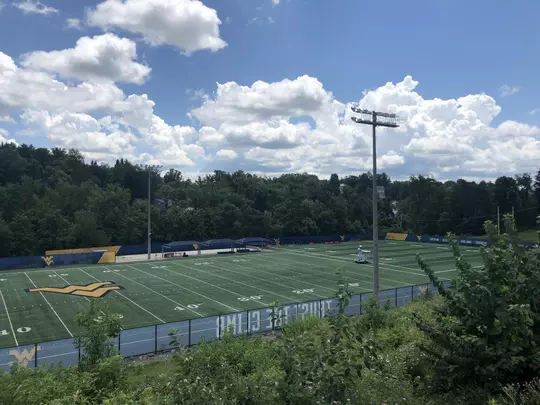
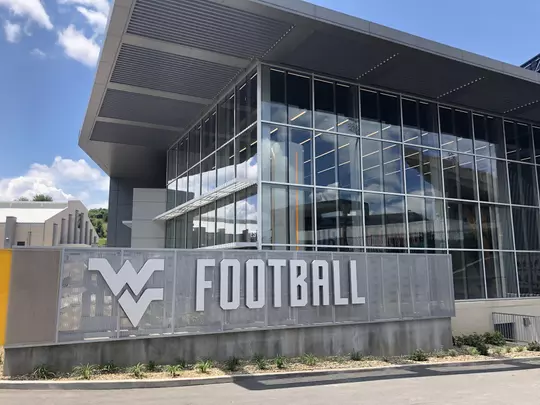
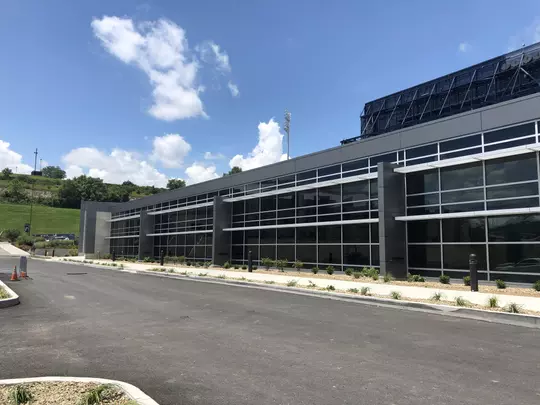
These improvements alone are impressive, but when you add the $55 million the department recently put into the Milan Puskar Center through the issuance of bonds, the upgrades collectively have the potential to become transformational.
When Mountaineer fans get an opportunity later this summer to see what has taken place inside the Puskar Center - new team and training rooms, nutrition and hydrotherapy centers, expanded locker rooms, a fully renovated team lounge, new Hall of Traditions, completely refurbished offices and more - they will be astonished.
That goes for Mountaineer football prospects, too!
WVU football standout and retired professional football executive Ken Herock recently toured the new facility and proclaimed it to be in the same league with some of the best football facilities in the country. Lyons envisions the renovated Puskar Center supplementing Neal Brown’s tremendous recruiting program he is establishing at WVU.
“It’s about selling West Virginia University and being able to bring a recruit into our facility and showing them that we are truly invested in the program,” Lyons explained. “In order to recruit the type of athletes we need to be successful in the Big 12 and on a national level, we needed to make these facility improvements; and we need these improvements to continue.”
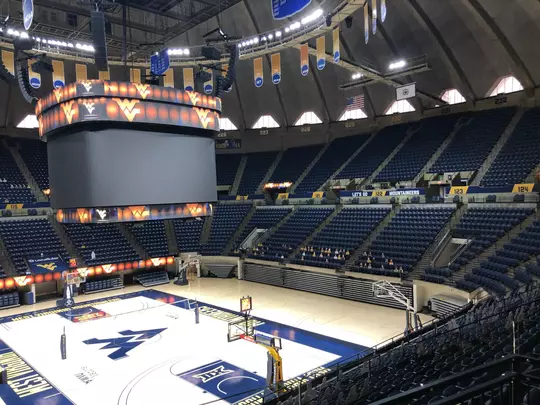
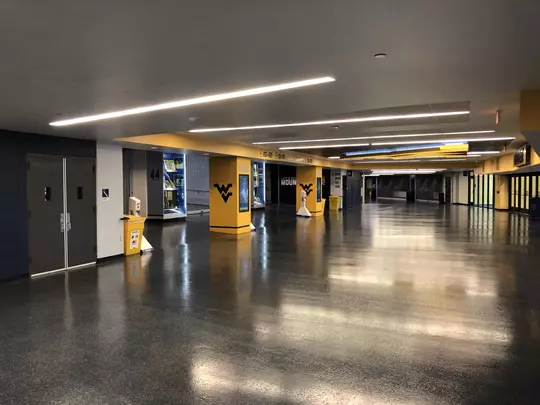
Across town at the WVU Coliseum, the 50-year-old basketball facility has experienced a rebirth of sorts with the improvements that have taken place there over the last five years. It began with a new marquee shortly into Lyons’ tenure and continued with completely refurbished men’s and women’s game-day locker rooms. Prior to the 2018 season, a totally remodeled inner concourse with wider walkways, additional concessions and restrooms totaling $23 million was completed to enhance the fan experience in the arena.
Last year, a state-of-the-art, high definition video board was installed along with new lighting, sound system, ribbon boarding and graphics to give the Coliseum a more modern look. And, thanks to a generous contribution made by Ken and Jennifer Mason of Alma, West Virginia, for the first time in 50 years, the WVU Coliseum has new chairback seating. The new seats are in a darker shade of blue and finally match the current color scheme in the facility.
A mobile rifle range, made possible through a generous gift from Mountaineer football standout Bill McKenzie, allowed rifle to serve as host of the NCAA championships inside the WVU Coliseum in 2019. It was the first-time Morgantown was the host site for an NCAA championship event, and it resulted in a meet attendance record. The rifle championships are scheduled to return to Morgantown later this decade.
Amazingly, the current wave of facility improvements don’t end there!
Ground was recently broken on a new $10 million Olympic Sports Performance Center that will reside in the renovated WVU Natatorium. This state-of-the-art facility will finally give West Virginia’s Olympic sports athletes an area to tend to their athletic, training, medical, nutritional and sports performance needs. This facility will be comparable to any facility in the country when it is completed.
A portion of the new performance center will also provide an erg room for rowing to house up to 50 rowing machines for rowers to remain in shape during those inclement months when they cannot get onto the water. It will also allow for every student-athlete to have a locker room for the first time ever.
“It’s a facility our Olympic sports teams have never had,” Lyons pointed out.
Made possible in part through a generous contribution from the Hazel Ruby McQuain Trust, the new facility will become the central area for many Mountaineer student-athletes to congregate.
It will also completely integrate the area below the Coliseum, tying in the Wrestling Pavilion, Cary Gym, the Shell Building, the outdoor tennis courts, men’s soccer training facility and the Basketball Practice Facility into one uniform campus once exterior work is completed.
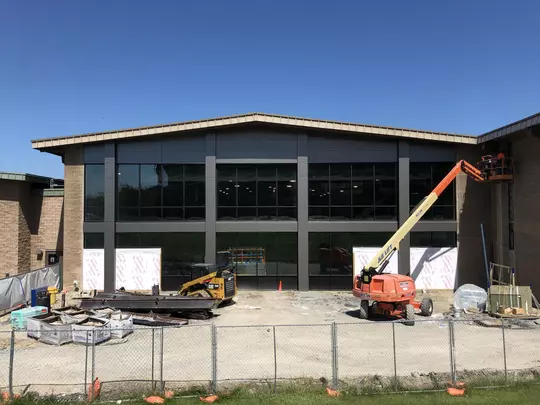
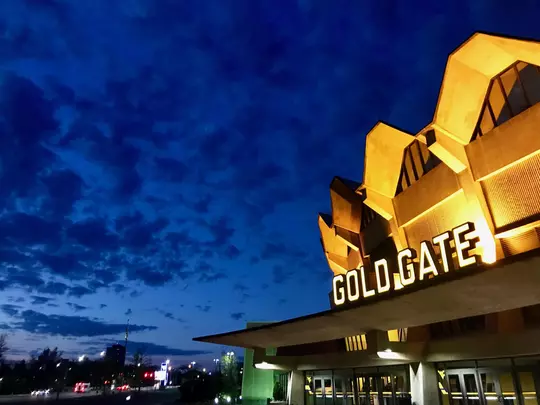
On a smaller scale, an office renovation project was recently completed at the Wrestling Pavilion and Monongalia County Ballpark underwent upgrades for new offices and a nutrition center totaling $500,000.
In all, when counting the public/private arrangements with Monongalia County for baseball, swimming and track and field, approximately $220 million has been invested in athletics facilities for West Virginia’s student-athletes so far since the Mountaineers joined the Big 12 Conference in 2012, with close to $165 million of that occurring during Lyons’ watch.
The mid-1960s was considered the highwater mark for athletic facility expansion at WVU during Red Brown’s tenure as athletics director, but that pales in comparison to what has been invested in athletics facilities presently. It’s a clear example of Lyons believing in his coaches and student-athletes, and demonstrates that he is dead serious about having a well-rounded athletics program for which all Mountaineer fans can be proud.
“We are competing against Pitt, Penn State, Ohio State, Virginia Tech and Maryland among others, regionally, and we want to make West Virginia a viable alternative for the kids in those states who don’t choose those schools,” Lyons explained. “I think when some of those kids get on our campus and see what we’ve invested in our athletics programs, they are going to realize that we are very serious about being successful here.”
In tomorrow’s final installment, we will examine what Shane Lyons envisions in the future for West Virginia’s athletic facilities and the need for continued support from Mountaineer Nation.