WVU Athletics Facilities: An In-Depth Look
July 03, 2021 09:00 AM | General, Blog
Over the next three days, we will be celebrating our 10th season in the Big 12 Conference by examining the dramatic impact the league has had on West Virginia University’s athletics facilities. Today, we review where those facilities were in 2012 during WVU’s first season of competition in the Big 12 and the many obstacles it had to overcome in trying to catch up to its peers.
Tomorrow, we will detail all of the exciting facility improvements that have taken place since West Virginia made the move to the Big 12, including the accelerated pace current director of athletics Shane Lyons and WVU President Gordon Gee have adopted since Lyons assumed athletics leadership in 2015.
And finally, on Monday, we will take a peek into the future and explore what Lyons envisions for Mountaineer athletics facilities in the years to come as West Virginia University athletics continues its climb toward greatness.
MORGANTOWN, W.Va. – When Ed Pastilong was named athletics director in the spring of 1989, West Virginia was coming off its greatest football season in school history. Don Nehlen’s Mountaineers had reached the doorstep to their first-ever national championship before losing to top-ranked Notre Dame in the Fiesta Bowl.
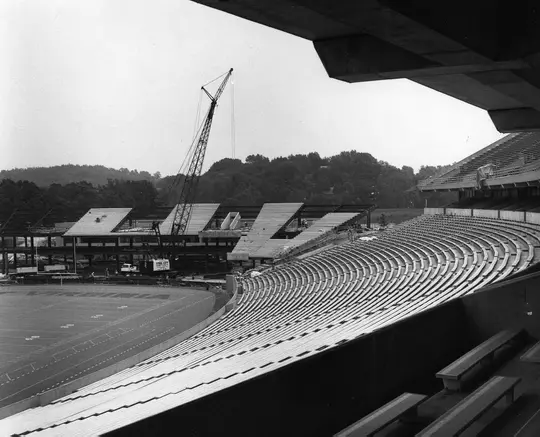
For the first time ever, West Virginia had averaged more than 60,000 fans per game at Mountaineer Field; its capacity expanded to 63,500 just three years prior, and the athletics department was generating record revenue during a time when the state was experiencing high unemployment, WVU was in the midst of a serious financial crisis and the state Legislature was contemplating more cuts to higher education.
One of the University’s solutions to its growing budgetary dilemma in the mid-1980s was to have athletics pay the tuition and fees for its student-athletes, which in the past had been waived. Pastilong, understanding the department’s bottom line was going to be severely stressed, particularly during the years when the football team didn’t go to bowl games, began exploring ways to supplement this new expenditure.
After attending a NACDA conference and listening to a presentation about athletic endowments, he decided to implement an Athletic Endowment Fund for WVU athletics with the yearly return on the investment earmarked to offset the rising cost of tuition waivers. He also anticipated those costs would continue to grow because a large percentage of WVU’s scholarship athletes were recruited from out of state.
“That was always the first bill we had to pay,” Pastilong recently recalled.
The AEF, as it came to be known within the athletics department, was a brilliant solution to this new financial disadvantage the Mountaineers had compared to many of their regional rivals. The Mountaineer Athletic Club did a great job through the years identifying donors to support the endowment, which grew to more than $30 million by the time Pastilong retired in 2010, but its fundraising efforts were being utilized to offset yearly operational costs.
Consequently, this made it much more difficult for West Virginia’s athletics facilities to keep pace with its peers, such as Virginia Tech, which made eye-opening improvements to Lane Stadium in the 1990s when the late Jim Weaver was its athletics director. Lane Stadium helped coach Frank Beamer transform Virginia Tech into a national power by the late 1990s because Weaver had the foresight and the courage to invest in a coach in whom he believed.
This was something West Virginia simply couldn’t do at the time, and as a result, its facilities began to stagnate. When you add up the time and the effort West Virginia devoted to fundraising for the Athletic Endowment Fund over the 20 years Pastilong was athletics director, you are talking about a substantial amount of money that potentially could have been devoted to facilities.
Still, Pastilong’s department was able to invest more than $65 million in facilities during his tenure, including the construction of stadium suites at Mountaineer Field in 1994 as a result of revenues obtained from WVU’s appearance in the Sugar Bowl. Milan “Mike” Puskar’s $20 million gift to West Virginia University, $14 million of which went to athletics, helped fund additional end zone suites in 2004.
The Caperton Indoor Practice Facility was dedicated in August, 1998, and more than $4 million was also invested in the Milan Puskar Center for new locker rooms in 2008.
Around the same time the Caperton Indoor Facility opened, successful businessman Bray Cary and his wife, Diane, contributed the funds that enabled West Virginia to build a $1.5 million gymnastics training center, which came to be known as Cary Gym. Prior to that, WVU’s gymnasts were forced to train in antiquated Stansbury Hall.

Women’s tennis got a new playing surface for its outdoor courts in 1999 and also entered into a leasing agreement with Ridgeview Racquet Club to utilize its facility for practice and indoor competitions soon after the facility opened in 2005.
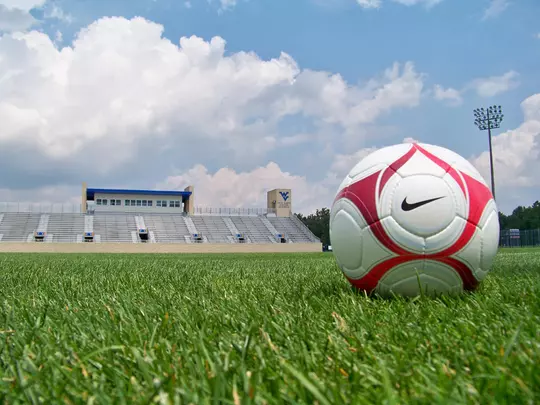
Through the generosity of Wheeling businessman Sylvan “Dick” Dlesk, Dick Dlesk Stadium for men’s and women’s soccer was dedicated in 2004. The 1,600-seat facility proved to be a boon for the men’s and women’s soccer program, particularly Nikki Izzo-Brown’s women, who reached the College Cup Finals in 2016.
In 2007, a gift from the Hazel Ruby McQuain Charitable Trust enabled the athletics department to open its $1.4 million WVU Wrestling Pavilion, and the WVU Boathouse, located below Morgantown’s Wharf District, was also completed that year.
In 2010, natural grass practice facilities were developed for men’s and women’s soccer with the women’s team's Dreamswork Field also containing a locker room, office suite, lounge, athletic training area, equipment room and public restrooms.
Men’s basketball coach Bob Huggins helped assemble a group of contributors to begin construction on a new men’s and women’s basketball practice facility, which opened in 2012 two years after Pastilong’s retirement. The $25 million facility has helped the men and women remain top 25-caliber programs under Huggins and women’s coach Mike Carey.

These were some of the major facility enhancements that took place prior to West Virginia joining the Big 12, but many other areas were still in dire need of attention when Oliver Luck and WVU president Jim Clements opted to pursue membership in the Big 12 Conference in 2011.
Baseball’s Hawley Field was adequate for the Atlantic 10 and the Big East when West Virginia played in those two conferences but woefully inadequate for the Big 12. The same could be said for West Virginia’s swimming and diving, indoor and outdoor tracks and tennis facilities.
Golf was re-introduced as a University sport in 2015 without a home venue or training facility, and the WVU Coliseum, which opened in 1970, was beginning to show its age.
Most of the money that had been invested in the Coliseum through the years was for general maintenance, not to mention the emergency asbestos abatement project in 2000 that required the men’s and women’s teams to play their home games at different venues throughout the Mountain State that season. By the time Huggins returned to coach his alma mater in 2007, not much in the Coliseum had changed from his playing days in the mid-1970s.

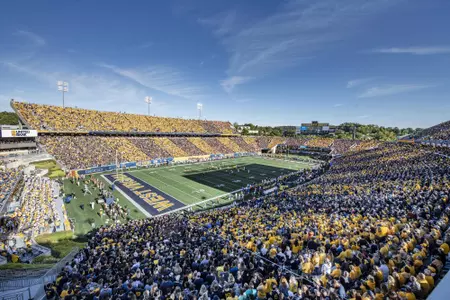
Mountaineer Field, which became known as Milan Puskar Stadium in 2004, was also in dire need of significant upgrading by the late 2000s. The narrow concourses and lack of concessions and restroom facilities made it difficult for Mountaineer fans to enjoy their experiences at home football games. On many occasions, fans were still standing in line waiting to use the restroom or purchase food when the second half was underway.
The Olympic sports teams did not have an adequate training center for individual skill development, requiring them to schedule free time at the Milan Puskar Center for team workout sessions. And, believe it or not, there were still a handful of athletics teams that did not have a place to dress when WVU began competing in the Big 12 in 2012.
But that was about to change, thanks to the massive revenue boost athletics was going to receive from its membership in the Big 12, and the great vision put forth by athletics directors Oliver Luck and Shane Lyons, and WVU president Gordon Gee.
Tomorrow, we will examine the significant impact nine years in the Big 12 Conference has had on WVU athletics facilities.