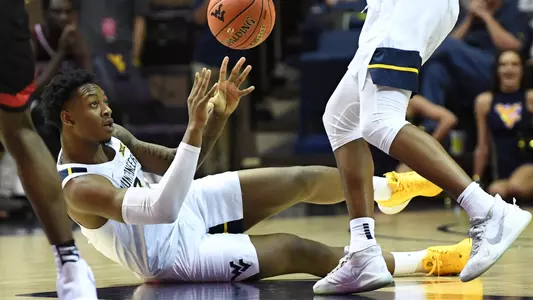
Photo by: All Pro Photography/Dale Sparks
Resolve To Guard Paying Big Dividends For Mountaineers
January 02, 2020 04:42 PM | Men's Basketball
MORGANTOWN, W.Va. – If you go back and listen to West Virginia coach Bob Huggins' postgame press conferences from last year, he spent a good portion of them lamenting his team's inadequate perimeter defense.
And last year, it was very inadequate.
Teams shot 45.8 percent against West Virginia – an unheard-of number against Huggins' teams – which put the Mountaineers 291 out of 351 basketball programs nationally in field goal percentage defense.
Against the 3, WVU was just as bad as it allowed teams to shoot 36.1 percent from behind the arc, which put it 283 at out 351.
Today, less than 12 months later, it's been a complete 180.
We are 12 games into the 2019-20 season and just two teams in college basketball are better than West Virginia at guarding the 3 (25.4 percent), and only six have a lower opponent field goal percentage than the 35.9 percent the Mountaineers are allowing this year.
That's a 10-percent change in both categories, which in statistical parlance is about like the difference between driving an Escalade and your father's old Plymouth Reliant, or Reluctant as we used to call it.
During last Sunday's attention-getting victory over No. 2-ranked Ohio State, West Virginia guarded the Buckeyes all the way to the water fountain, and it was apparent to all they didn't like it.
But why? Why is West Virginia's perimeter defense so much better than last year?
"Nobody has ever stopped somebody that didn't want to," Huggins explained Thursday morning. "I just think our resolve to guard is a little bit better.
"Our guys work hard in practice, and I think we're getting better because of their work ethic. It comes down to you want to do it," he said.
It's clear the willingness to guard dribble drives and cover open shooters is much different – some of that, of course, is a product of the returning guys wanting to do it - but that only accounts for seven of the players on the team.
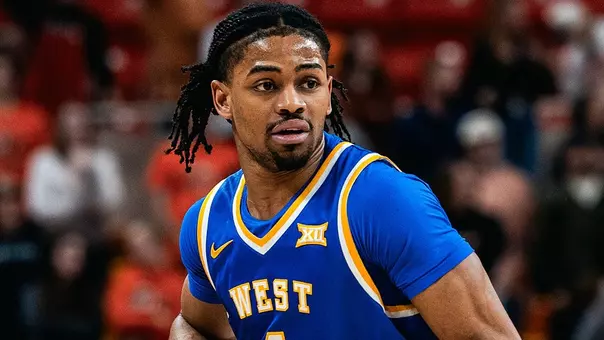
There are seven other guys on the roster who weren't around last year, and they have contributed to this as well, particularly freshman guard Miles McBride and Arkansas transfer Gabe Osabuohien.
McBride gives West Virginia size and physicality at point guard that it missed last year with the graduation of Jevon Carter, while Osabuohien is giving the Mountaineers the same inside/wing defensive presence that Nathan Adrian and Jonathan Holton once provided during the Mountaineers' "Press Virginia" days.
It was Osabuohien who made a team-best 11 deflections during last Sunday's win in Cleveland against Ohio State. According to a tweet made on West Virginia Basketball's official twitter account, he's had 43 deflections in the last five games and has totaled 53 for the season despite playing three fewer games than everyone else.
Osabuohien also has taken a team-best eight charges.
So it's clear Miles and Osabuohien have demonstrated a will to guard in addition to those seven guys returning.
On Thursday, Huggins was asked if the expansion of the 3-point line has played any type of role in West Virginia's improved 3-point field goal percentage defense.
He doesn't think so.
"The biggest thing about moving the line back is you have less room in the corner and you have more guys stepping out of bounds," Huggins explained. "The shots that people make are step-in shots, and you get a lot of those from dribble penetration, and as the season has gone along, I do think we're doing a better job of stopping penetration and not having to leave our guy to go stop a ball handler.
"The ideal thing is guard your man and not need so much help," he concluded.
It's apparent the guys Huggins is putting out on the floor this year are doing a much better job of staying in front of their man.
But another stiff test looms this Saturday at Kansas when the Mountaineers will try and stay in front of the third-ranked Jayhawks, who are shooting an impressive 51.6 percent from the floor. That's third in the country behind Dayton and McNeese and the best among Power 5 teams.
However, a lot of Kansas' accurate shooting is a result of getting great looks near the basket with Udoka Azubuike converting almost 80 percent of his 89 field goal attempts this year.
The senior has missed just 18 shots in 12 games, an astonishing stat.
Slowing him down will require an all-hands-on-deck approach - which is exactly what happened last Sunday when the Mountaineers limited Ohio State's Kaleb Wesson to 3-of-11 from the floor.
It took Derek Culver, Oscar Tshiebwe, Logan Routt and Osabuohien and just about all of their allotted 20 fouls to get the job done against the Buckeyes.
It will likely take a similar performance from them on Saturday. Fortunately for West Virginia, they're willing to try.
And last year, it was very inadequate.
Teams shot 45.8 percent against West Virginia – an unheard-of number against Huggins' teams – which put the Mountaineers 291 out of 351 basketball programs nationally in field goal percentage defense.
Against the 3, WVU was just as bad as it allowed teams to shoot 36.1 percent from behind the arc, which put it 283 at out 351.
Today, less than 12 months later, it's been a complete 180.
We are 12 games into the 2019-20 season and just two teams in college basketball are better than West Virginia at guarding the 3 (25.4 percent), and only six have a lower opponent field goal percentage than the 35.9 percent the Mountaineers are allowing this year.
That's a 10-percent change in both categories, which in statistical parlance is about like the difference between driving an Escalade and your father's old Plymouth Reliant, or Reluctant as we used to call it.
During last Sunday's attention-getting victory over No. 2-ranked Ohio State, West Virginia guarded the Buckeyes all the way to the water fountain, and it was apparent to all they didn't like it.
But why? Why is West Virginia's perimeter defense so much better than last year?
"Nobody has ever stopped somebody that didn't want to," Huggins explained Thursday morning. "I just think our resolve to guard is a little bit better.
"Our guys work hard in practice, and I think we're getting better because of their work ethic. It comes down to you want to do it," he said.
It's clear the willingness to guard dribble drives and cover open shooters is much different – some of that, of course, is a product of the returning guys wanting to do it - but that only accounts for seven of the players on the team.
There are seven other guys on the roster who weren't around last year, and they have contributed to this as well, particularly freshman guard Miles McBride and Arkansas transfer Gabe Osabuohien.
McBride gives West Virginia size and physicality at point guard that it missed last year with the graduation of Jevon Carter, while Osabuohien is giving the Mountaineers the same inside/wing defensive presence that Nathan Adrian and Jonathan Holton once provided during the Mountaineers' "Press Virginia" days.
It was Osabuohien who made a team-best 11 deflections during last Sunday's win in Cleveland against Ohio State. According to a tweet made on West Virginia Basketball's official twitter account, he's had 43 deflections in the last five games and has totaled 53 for the season despite playing three fewer games than everyone else.
Osabuohien also has taken a team-best eight charges.
So it's clear Miles and Osabuohien have demonstrated a will to guard in addition to those seven guys returning.
On Thursday, Huggins was asked if the expansion of the 3-point line has played any type of role in West Virginia's improved 3-point field goal percentage defense.
He doesn't think so.
"The biggest thing about moving the line back is you have less room in the corner and you have more guys stepping out of bounds," Huggins explained. "The shots that people make are step-in shots, and you get a lot of those from dribble penetration, and as the season has gone along, I do think we're doing a better job of stopping penetration and not having to leave our guy to go stop a ball handler.
"The ideal thing is guard your man and not need so much help," he concluded.
It's apparent the guys Huggins is putting out on the floor this year are doing a much better job of staying in front of their man.
But another stiff test looms this Saturday at Kansas when the Mountaineers will try and stay in front of the third-ranked Jayhawks, who are shooting an impressive 51.6 percent from the floor. That's third in the country behind Dayton and McNeese and the best among Power 5 teams.
However, a lot of Kansas' accurate shooting is a result of getting great looks near the basket with Udoka Azubuike converting almost 80 percent of his 89 field goal attempts this year.
The senior has missed just 18 shots in 12 games, an astonishing stat.
Slowing him down will require an all-hands-on-deck approach - which is exactly what happened last Sunday when the Mountaineers limited Ohio State's Kaleb Wesson to 3-of-11 from the floor.
It took Derek Culver, Oscar Tshiebwe, Logan Routt and Osabuohien and just about all of their allotted 20 fouls to get the job done against the Buckeyes.
It will likely take a similar performance from them on Saturday. Fortunately for West Virginia, they're willing to try.
Players Mentioned

F
/ Men's Basketball
G
/ Men's Basketball
F
/ Men's Basketball
F
/ Men's Basketball
F
/ Men's BasketballRoss Hodge & Honor Huff | Stanford Postgame
Thursday, April 02
Ross Hodge | College Basketball Crown Preview
Monday, March 30
Honor Huff | College Basketball Crown Preview
Monday, March 30
Ross Hodge | BYU Postgame
Wednesday, March 11