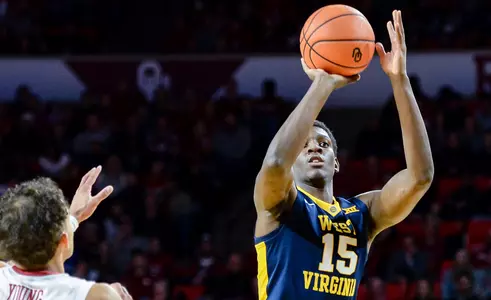
Photo by: Joshua R. Gateley
On-Target Mountaineers Tough to Beat
February 08, 2018 04:11 PM | Men's Basketball
MORGANTOWN, W.Va. - How many times have we heard Bob Huggins say, "when we make shots …" When his teams make shots it almost always wins because a basketball going through the hoop registers more points on the scoreboard.
No rocket science there.
But it also wins because those made shots carry over to the energy level it has on the defensive end of the floor. Everything just seems to work better when the basketball goes through the net.
"I think when you make shots you play harder, you have more enthusiasm and more bounce," Huggins says. "Making shots cures a lot of things."
It sure does. We saw that last Saturday afternoon when West Virginia, now 18-6, 7-4, shot a season-high 54.9 percent in its impressive 38-point victory over Kansas State, which, by the way, just went down to Austin Wednesday night and beat Texas, 67-64.
We saw it in a huge, 35-point home win against Texas when the Mountaineers made 12-of-23 from 3 and shot 46 percent overall from the floor for the game.
And we've also seen what can happen on the flipside when the basketball is clanking off the rim, ricocheting off the backboard or sailing into the front-row seats.
Remember Texas A&M?
WVU chucked and ducked its way to a 23-point loss against the Aggies in Germany.
How about Texas Tech?
The Mountaineers made only 39 percent of their field goal attempts in that one and ended up blowing a double-digit lead.
Kansas? Same deal. A big lead evaporated when a 5-for-27 shooting performance from 3 seized defeat from the jaws of victory.
West Virginia shot 25.9 percent from 3 in its nine-point downer at TCU, and its shooting stroke also failed it in recent losses to Kentucky and Iowa State.
This team is currently shooting 42.8 percent heading into Saturday's game against Oklahoma State, which ranks West Virginia 270th out of 351 Division I programs.
Only one regular player, sophomore forward Sagaba Konate, is shooting better than 50 percent from the floor at 52.5 percent. The Mountaineers' four primary outside shooters are shooting 40.1 percent, 43.6 percent, 40.8 percent and 44.5 percent respectively.
But this is not Huggins' worst shooting team, nor his worst Cincinnati shooting team for that matter. It's not even close.
His two worst shooting West Virginia teams, 2015 and 2013, made just 40.8 percent of their field goal attempts. The 2015 squad ranked 293rd in field goal percentage while the 2013 squad ranked 288th in shooting. (Incidentally, for Huggins to go 25-10 with a team that shot the ball as poorly as his 2015 squad did might be one of the best coaching jobs of his soon-to-be hall of fame career!).
At any rate, the worst shooting Huggins team of the 3-point era (since 1987) was his 2003 Cincinnati squad that made only 40.4 percent of its field goal attempts. That team also took 34.6 percent of its total shot attempts from 3 - the highest percentage of 3-pointers any Huggins-coached Bearcat squad ever attempted, which brings us back to this year.
The Mountaineers have taken 40.4 percent of their total shot attempts from 3, far and away the highest percentage of 3s ever attempted by any Huggins team. The prior high was the 36.5 percent that his 2016 Mountaineer team tried.
Before this season, his West Virginia teams have taken anywhere from a high of 36.5 percent of their total shots from 3 in 2016 to a low of 30.4 percent in 2012.
The first Mountaineer team Huggins inherited in 2008 from John Beilein, whose 2006 squad once tried 51.5 percent of its field goals from behind the arc, took just 34.2 percent of their shots from 3.
That was in line with his most recent Cincinnati teams.
The best shooting team Huggins has had during the 3-point era was his '97 Bearcats that took just 28.6 percent of their total shot attempts from 3. That club shot 49.6 percent overall to rank fourth in the country. When Cincinnati needed a basket that season, it got them close to the goal and scored.
Going back to Huggins' Akron days when the 3-point shot was first adopted, his teams there took 13.7 percent of their total field goal attempts from 3 in '87, 14.0 percent from 3 in '88 and 19.6 percent from behind the 3-point line in '89.
It wasn't until five years into his Cincinnati tenure in 1994 that one of his Bearcat teams took more than 30 percent of their shots from 3. That squad tried 34.4 percent of its total shots from behind the arc and made only 42.8 percent of them overall.
His only team at Kansas State in 2007 took about the same amount of 3s as his Cincinnati teams.
By the way, the best shooting West Virginia team of the 3-point era was Gale Catlett's 1989 club that shot 51.4 percent overall on the way to a 26-5 record. They took just 13.4 percent of their shots from 3 during a time when coaches typically had more control over shot selection.
Back then, the quickest way to get the hook from Catlett or any other coach from that era was by taking a bad shot.
These days, Huggins rarely yanks a guy when he misses a shot - more often than not they get the hook for what they failed to do defensively than for taking a bad shot.
So, what does all of this mean?
To me, it means the shooters the Mountaineers have this year are really not that much different than the others Huggins has had in the past. The biggest difference is where they taking a lot of them from.
That's something ESPN's Jay Bilas alluded to a few weeks ago when he was in Morgantown to call West Virginia's game against Kentucky.
"It's not that they can't shoot, it's some of the shots they are taking," Bilas said. "I thought some of the shots they took against Kansas were questionable. They were challenged, and they could have gotten much better shots."
They certainly took better ones against Kansas State last Saturday, and that trend continued with Monday night's big road win at 17th-ranked Oklahoma.
Hopefully, the good shooting choices continue on Saturday afternoon against Oklahoma State.
No rocket science there.
But it also wins because those made shots carry over to the energy level it has on the defensive end of the floor. Everything just seems to work better when the basketball goes through the net.
"I think when you make shots you play harder, you have more enthusiasm and more bounce," Huggins says. "Making shots cures a lot of things."
It sure does. We saw that last Saturday afternoon when West Virginia, now 18-6, 7-4, shot a season-high 54.9 percent in its impressive 38-point victory over Kansas State, which, by the way, just went down to Austin Wednesday night and beat Texas, 67-64.
We saw it in a huge, 35-point home win against Texas when the Mountaineers made 12-of-23 from 3 and shot 46 percent overall from the floor for the game.
And we've also seen what can happen on the flipside when the basketball is clanking off the rim, ricocheting off the backboard or sailing into the front-row seats.
Remember Texas A&M?
WVU chucked and ducked its way to a 23-point loss against the Aggies in Germany.
How about Texas Tech?
The Mountaineers made only 39 percent of their field goal attempts in that one and ended up blowing a double-digit lead.
Kansas? Same deal. A big lead evaporated when a 5-for-27 shooting performance from 3 seized defeat from the jaws of victory.
West Virginia shot 25.9 percent from 3 in its nine-point downer at TCU, and its shooting stroke also failed it in recent losses to Kentucky and Iowa State.
This team is currently shooting 42.8 percent heading into Saturday's game against Oklahoma State, which ranks West Virginia 270th out of 351 Division I programs.
Only one regular player, sophomore forward Sagaba Konate, is shooting better than 50 percent from the floor at 52.5 percent. The Mountaineers' four primary outside shooters are shooting 40.1 percent, 43.6 percent, 40.8 percent and 44.5 percent respectively.
But this is not Huggins' worst shooting team, nor his worst Cincinnati shooting team for that matter. It's not even close.
His two worst shooting West Virginia teams, 2015 and 2013, made just 40.8 percent of their field goal attempts. The 2015 squad ranked 293rd in field goal percentage while the 2013 squad ranked 288th in shooting. (Incidentally, for Huggins to go 25-10 with a team that shot the ball as poorly as his 2015 squad did might be one of the best coaching jobs of his soon-to-be hall of fame career!).
At any rate, the worst shooting Huggins team of the 3-point era (since 1987) was his 2003 Cincinnati squad that made only 40.4 percent of its field goal attempts. That team also took 34.6 percent of its total shot attempts from 3 - the highest percentage of 3-pointers any Huggins-coached Bearcat squad ever attempted, which brings us back to this year.
The Mountaineers have taken 40.4 percent of their total shot attempts from 3, far and away the highest percentage of 3s ever attempted by any Huggins team. The prior high was the 36.5 percent that his 2016 Mountaineer team tried.
Before this season, his West Virginia teams have taken anywhere from a high of 36.5 percent of their total shots from 3 in 2016 to a low of 30.4 percent in 2012.
The first Mountaineer team Huggins inherited in 2008 from John Beilein, whose 2006 squad once tried 51.5 percent of its field goals from behind the arc, took just 34.2 percent of their shots from 3.
That was in line with his most recent Cincinnati teams.
The best shooting team Huggins has had during the 3-point era was his '97 Bearcats that took just 28.6 percent of their total shot attempts from 3. That club shot 49.6 percent overall to rank fourth in the country. When Cincinnati needed a basket that season, it got them close to the goal and scored.
Going back to Huggins' Akron days when the 3-point shot was first adopted, his teams there took 13.7 percent of their total field goal attempts from 3 in '87, 14.0 percent from 3 in '88 and 19.6 percent from behind the 3-point line in '89.
It wasn't until five years into his Cincinnati tenure in 1994 that one of his Bearcat teams took more than 30 percent of their shots from 3. That squad tried 34.4 percent of its total shots from behind the arc and made only 42.8 percent of them overall.
His only team at Kansas State in 2007 took about the same amount of 3s as his Cincinnati teams.
By the way, the best shooting West Virginia team of the 3-point era was Gale Catlett's 1989 club that shot 51.4 percent overall on the way to a 26-5 record. They took just 13.4 percent of their shots from 3 during a time when coaches typically had more control over shot selection.
Back then, the quickest way to get the hook from Catlett or any other coach from that era was by taking a bad shot.
These days, Huggins rarely yanks a guy when he misses a shot - more often than not they get the hook for what they failed to do defensively than for taking a bad shot.
So, what does all of this mean?
To me, it means the shooters the Mountaineers have this year are really not that much different than the others Huggins has had in the past. The biggest difference is where they taking a lot of them from.
That's something ESPN's Jay Bilas alluded to a few weeks ago when he was in Morgantown to call West Virginia's game against Kentucky.
"It's not that they can't shoot, it's some of the shots they are taking," Bilas said. "I thought some of the shots they took against Kansas were questionable. They were challenged, and they could have gotten much better shots."
They certainly took better ones against Kansas State last Saturday, and that trend continued with Monday night's big road win at 17th-ranked Oklahoma.
Hopefully, the good shooting choices continue on Saturday afternoon against Oklahoma State.

Players Mentioned

F
/ Men's BasketballCollege Basketball Crown Recap
Thursday, April 16
Ross Hodge, Honor Huff & Brenen Lorient | Oklahoma Postgame
Sunday, April 05
Ross Hodge, Treysen Eaglestaff & Brenen Lorient | Creighton Postgame
Saturday, April 04
Ross Hodge & Honor Huff | Stanford Postgame
Thursday, April 02