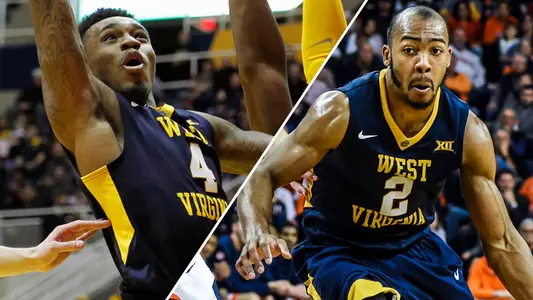
Experienced Backcourt Usually Means Great Success
October 17, 2017 01:31 PM | Men's Basketball
MORGANTOWN, W.Va. - Do you want to have a good college basketball team? Then have experienced guards.
You can certainly get by with inexperienced guards, but when you've got backcourt players with tons of experience like West Virginia does with seniors Jevon Carter and Daxter Miles Jr., it makes things a whole lot easier.
With those two West Virginia has got the most experienced starting backcourt of any Power 5 team in America, and the second-most experience to Vermont's Cam Ward and Trae Bell-Hayes among starting backcourts in the country this year.
Go back and research the last seven Mountaineer teams to make deep runs in the NCAA Tournament. All of them had veteran, battle-tested backcourts, including last year's Sweet 16 team with juniors Carter and Miles.
In 2015, West Virginia started two seniors in its Sweet 16 game against Kentucky in Juwan Staten and Gary Browne.
In 2010, it was junior Joe Mazzulla and senior Da'Sean Butler and their combined 289 career college games going up against Duke in the Final Four. In 2008, it was senior Darris Nichols and junior Alex Ruoff in the lineup against Xavier in the Sweet 16.
In 2006, John Beilein had three senior ball handlers in J.D. Collins, Mike Gansey and Joe Herber when the Mountaineers faced Texas in the Sweet 16. A year before that, those three also manned the backcourt when West Virginia lost to Louisville in the Elite Eight.
And even back to 1998 when Gale Catlett's team upset its way to its Sweet 16 game against Utah, he did so with two experienced backcourt players in seniors Jarrod West and Adrian Pledger.
Therefore, when you've got older players with the basketball in their hands, you've always got a chance.
"It's a lot more than them knowing," West Virginia coach Bob Huggins said last week. "I think their teammates have to trust them. When they get on their teammates, their teammates have to know that they've earned that. They've got to know what they're talking about."
For Carter and Miles, they've got four years' worth of Big 12 basketball stored up in their melons. Both have been key players during the Mountaineers' three-year run that has seen them win 79, lose just 28 and reach the NCAA Tournament all three seasons.
So, when JC and Dax talk, people listen.
"We've got a lot of guys that haven't really got a chance to experience what the college season has to offer so we definitely need my leadership, now more than ever," Carter said.
What does that entail?
"Take everything in, live in the moment; don't get too high and don't get too low," Carter explained. "Coach Huggs is going to throw a lot at you. Don't take how he's saying it but instead what he's actually saying."
That was the same thing Da'Sean Butler was telling his guys back in 2010.
"I think Da'Sean Butler was a great example," Huggins said. "He got on guys but they knew how hard he worked, they knew his understanding of what was supposed to happen and so you listen. It's very much a respect thing."
Huggins said that also applies to coaches.
"If you don't respect your coach or think he knows what he's talking about you're not going to pay him a whole lot of attention. That's life. That's why it's so important those guys not just lead you in experience, they lead you in effort, they lead you with all of the so-called intangible things that make your team a lot better."
He certainly has that with Carter, who the coaches say ranks right up there with the hardest working players they have ever coached.
Huggins admits there were times last year when he had to shut down Carter to keep him from wearing down at the end of the season.
"It's hard to get him out of practice. Some of them it's hard to get them into practice," Huggins said. "Da was that way. You take them out and you turn around and they're back in."
This year, Huggins said he will keep an eye on how much he's playing his veteran guards to a degree.
"It depends on the game," he said. "When the other team is really trying to slow it down he's going to play more minutes. It comes down to more possessions than it does time."
Huggins mentioned Juwan Staten, who played heavy minutes during his junior year in 2014 when the Mountaineers were playing a slower style, but less minutes during his senior season in 2015 when they sped teams up.
"Wanny came in and he was playing like 39 minutes a game and he was down to whatever it was, 28 or 29, and he said he wasn't getting the same kind of touches and the reality is we had more possessions so he had the ball more in 29 minutes than he did in 39 minutes," Huggins explained. "That's because of the speed of the game.
"I think (Carter is) an NBA player," Huggins added. "When you take exhibition games and everything that's 100 games. He better get used to it."
Carter said so far he sees a lot of similarities between this year's team and the other three that reached the NCAA Tournament during his WVU career.
"I think our press is going to be as effective as it's always been. I think we shoot it a whole lot better," Carter said. "We've got more guys that are consistently in the gym getting up shots and working to get better. I still feel like we turn the ball over too much and we still rebound it real well, I think; we're just young."
Young up front, perhaps, but certainly not in the backcourt.
You can certainly get by with inexperienced guards, but when you've got backcourt players with tons of experience like West Virginia does with seniors Jevon Carter and Daxter Miles Jr., it makes things a whole lot easier.
With those two West Virginia has got the most experienced starting backcourt of any Power 5 team in America, and the second-most experience to Vermont's Cam Ward and Trae Bell-Hayes among starting backcourts in the country this year.
Go back and research the last seven Mountaineer teams to make deep runs in the NCAA Tournament. All of them had veteran, battle-tested backcourts, including last year's Sweet 16 team with juniors Carter and Miles.
In 2015, West Virginia started two seniors in its Sweet 16 game against Kentucky in Juwan Staten and Gary Browne.
In 2010, it was junior Joe Mazzulla and senior Da'Sean Butler and their combined 289 career college games going up against Duke in the Final Four. In 2008, it was senior Darris Nichols and junior Alex Ruoff in the lineup against Xavier in the Sweet 16.
In 2006, John Beilein had three senior ball handlers in J.D. Collins, Mike Gansey and Joe Herber when the Mountaineers faced Texas in the Sweet 16. A year before that, those three also manned the backcourt when West Virginia lost to Louisville in the Elite Eight.
And even back to 1998 when Gale Catlett's team upset its way to its Sweet 16 game against Utah, he did so with two experienced backcourt players in seniors Jarrod West and Adrian Pledger.
Therefore, when you've got older players with the basketball in their hands, you've always got a chance.
"It's a lot more than them knowing," West Virginia coach Bob Huggins said last week. "I think their teammates have to trust them. When they get on their teammates, their teammates have to know that they've earned that. They've got to know what they're talking about."
For Carter and Miles, they've got four years' worth of Big 12 basketball stored up in their melons. Both have been key players during the Mountaineers' three-year run that has seen them win 79, lose just 28 and reach the NCAA Tournament all three seasons.
So, when JC and Dax talk, people listen.
"We've got a lot of guys that haven't really got a chance to experience what the college season has to offer so we definitely need my leadership, now more than ever," Carter said.
What does that entail?
"Take everything in, live in the moment; don't get too high and don't get too low," Carter explained. "Coach Huggs is going to throw a lot at you. Don't take how he's saying it but instead what he's actually saying."
That was the same thing Da'Sean Butler was telling his guys back in 2010.
"I think Da'Sean Butler was a great example," Huggins said. "He got on guys but they knew how hard he worked, they knew his understanding of what was supposed to happen and so you listen. It's very much a respect thing."
Huggins said that also applies to coaches.
"If you don't respect your coach or think he knows what he's talking about you're not going to pay him a whole lot of attention. That's life. That's why it's so important those guys not just lead you in experience, they lead you in effort, they lead you with all of the so-called intangible things that make your team a lot better."
He certainly has that with Carter, who the coaches say ranks right up there with the hardest working players they have ever coached.
Huggins admits there were times last year when he had to shut down Carter to keep him from wearing down at the end of the season.
"It's hard to get him out of practice. Some of them it's hard to get them into practice," Huggins said. "Da was that way. You take them out and you turn around and they're back in."
This year, Huggins said he will keep an eye on how much he's playing his veteran guards to a degree.
"It depends on the game," he said. "When the other team is really trying to slow it down he's going to play more minutes. It comes down to more possessions than it does time."
Huggins mentioned Juwan Staten, who played heavy minutes during his junior year in 2014 when the Mountaineers were playing a slower style, but less minutes during his senior season in 2015 when they sped teams up.
"Wanny came in and he was playing like 39 minutes a game and he was down to whatever it was, 28 or 29, and he said he wasn't getting the same kind of touches and the reality is we had more possessions so he had the ball more in 29 minutes than he did in 39 minutes," Huggins explained. "That's because of the speed of the game.
"I think (Carter is) an NBA player," Huggins added. "When you take exhibition games and everything that's 100 games. He better get used to it."
Carter said so far he sees a lot of similarities between this year's team and the other three that reached the NCAA Tournament during his WVU career.
"I think our press is going to be as effective as it's always been. I think we shoot it a whole lot better," Carter said. "We've got more guys that are consistently in the gym getting up shots and working to get better. I still feel like we turn the ball over too much and we still rebound it real well, I think; we're just young."
Young up front, perhaps, but certainly not in the backcourt.


Players Mentioned

G
/ Men's Basketball
G
/ Men's BasketballCollege Basketball Crown Recap
Thursday, April 16
Ross Hodge, Honor Huff & Brenen Lorient | Oklahoma Postgame
Sunday, April 05
Ross Hodge, Treysen Eaglestaff & Brenen Lorient | Creighton Postgame
Saturday, April 04
Ross Hodge & Honor Huff | Stanford Postgame
Thursday, April 02