Part Two of Our Exclusive Sit-Down With New Baseball Coach Steve Sabins
June 21, 2024 10:39 AM | Baseball, Blog
Share:
By: John Antonik
MORGANTOWN, W.Va. – Steve Sabins would rather trust his eyes than work off recruiting lists.
His eyes have helped him land some of the highest-ranked recruiting classes in school history. In 2018, his efforts as West Virginia's lead recruiter secured the 21st-best recruiting class in the country - the first time Mountaineer baseball had ever signed a top 25 recruiting class.
A year later, West Virginia's recruiting efforts were judged 23rd-best nationally and his run of top-40 classes has continued through 2023 with this year's massive class of freshmen that will be arriving on campus in the coming weeks.
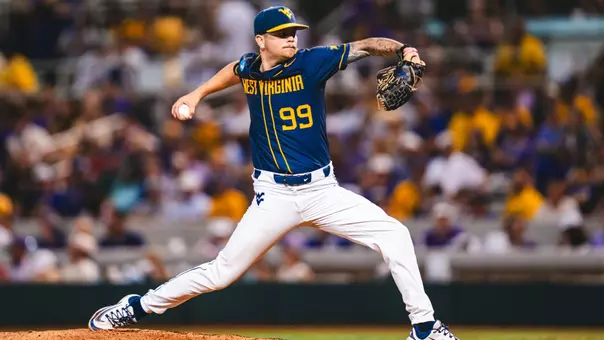
This past season, two of his signees – No. 1 pitcher Derek Clark and power-hitting infielder Kyle West – came from the Division II ranks through the transfer portal.
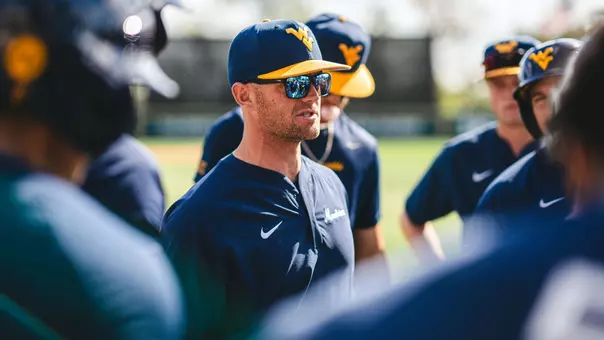
In part two of our conversation with West Virginia University's new baseball coach, Sabins picks up with his recruiting philosophy, future scheduling, the new indoor facility about to break ground and his thoughts on in-game strategy and delegating responsibilities to his assistant coaches. Steve Sabins follows Randy Mazey as the 20th head baseball coach in school history (WVU Athletic Communications). John Antonik: The JJ Wetherholt story has become well-known nationally now for how he wasn't really on people's radar screens, so, consequently, a lot of people didn't know about him coming out of Mars, Pennsylvania. But also, some of the Division II players you managed to sign in the transfer portal last year and how they came in and performed at such a high level this year was impressive to watch. It seems you really trust your eyes in the evaluation process. Can you talk about this a little bit?
Steve Sabins: I've taken so much pride in this, as have some of the other staff members that have come on board. We never ask a player who they are being recruited by. We take a lot of pride in never looking at their rankings and so we challenge ourselves to use our eyes to make our evaluations and use the data when we are unsure of ourselves. It's comforting to know that a player we're recruiting has another offer to a big school, but sometimes that's the kiss of death. You don't want to be like that other school. We want to be our own brand and value what we value.
The hardest part is to never compare. You might miss egregiously sometimes as well, but you also might hit on a Wetherholt that nobody has an offer to. We're trying to stay true to what we value, and I think that's why we've been able to build the program. We think that we have the best staff in the country, and we can have the best players in the country, but we can't try and be somebody else. We're trying to be authentic.
Antonik: Doesn't this really fit the region you are in because you've got so many kids, particularly in this state, that are maybe overlooked because they don't play enough games, or are not on the elite travel teams to get the type of exposure or maybe aren't as ready-made as the players in Florida, California or Texas? Don't you have to look at the moms and dads and sort of project where they are going to be after a couple of years of development?
Sabins: That's why we can't ever lose sight of what it takes in order to uncover those types of players. It works to call the high school coaches and talk to the families. When we get a feeling in our gut when it doesn't sound right, 'Okay, what are the red or green flags in our recruiting philosophy?' It's worth it to talk to other players that you've recruited about a player, follow them on social media and those things. The evaluation process is difficult, and you need to watch a lot of baseball and spend a lot of hours to be able to do that.
Such a big piece is forecasting how people will develop and a lot of that has to do with character and drive, so you are trying to measure the character and the drive of people as much as anything.
Antonik: On the field, you were the team's third base coach, and I know Randy Mazey was a very hands-on coach. There are many successful programs where the coaches bring in strong assistant coaches and delegate responsibilities and then hold them accountable. How will you do this moving forward?
Sabins: I don't think there are a lot of Randy Mazeys left in the game today, to tell you the truth, just because programs have gotten so big. There are so many resources and staff members, and there is so much information now, that it's hard for one person to be the most educated in a lot of different areas. He came up during an era when he was a pitcher, and he was a hitter in college. He coached both aspects, so he really had the knowledge to do it, but just like anything, staff members are starting to become more specialized.
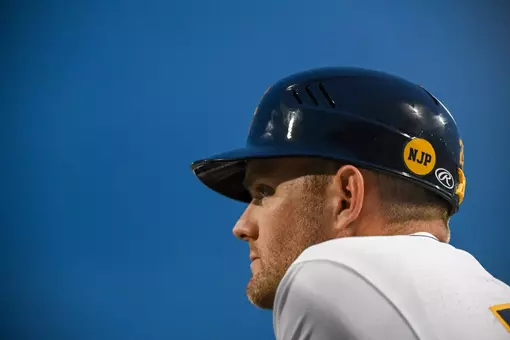
In the short term, I'm going to coach third base and run the offense. Coaching third base is just more out of a need to keep a few things similar on the field, because we're going to have a new pitch caller (recently promoted Justin Oney). We are going to have people making decisions on who needs to be in the game pitching. We are really going to utilize the staff to help make decisions in their areas just because we have a great staff, and I'm going to be doing things that I've never done before in college baseball, so I might as well ask the staff to do their part so we can all learn and grow together and figure this thing out.
Antonik: There is a lot of information into managing a game, and I'm sure that's something you are looking forward to.
Sabins: I'm excited about this. I would always joke with Randy because in every squad game in the fall he would call the pitches and I would run the offense. Essentially, I was always trying to beat Randy for nine straight years in scrimmage games. If he picked off runners, he would give it to me and if we scored a lot of runs, I would do the same, so it was kind of a game we played all along.
I would be naive to think a guy who wasn't a pitcher and is not the pitching coach working with the pitchers would be the best person to call pitches. You have a guy who is with them in the bullpen, who knows their heartbeat and knows the confidence in the kid's eye when he throws the slider, or the changeup is not quite there yet. There are a lot of mismatches that can happen, so my philosophy is if I'm going to do new stuff and the staff is going to do new stuff, I want the people closest to the players in their area have the biggest impact on the game.
Antonik: Is there going to be a learning curve in this regard?
Sabins: No doubt. We are going to make mistakes, but I would be naïve to think that I can call pitches better than the pitching coach.
Antonik: In terms of scheduling, the league is changing with the subtractions and the additions, but nonconference-wise, are you going to continue to play the local power conference schools during the midweek and what is that first month of the season going to look like moving forward?
Sabins: The 2025 schedule is already set. We've got 56 games ready to roll. In general, this year was the biggest change because we started playing 30 conference games. Our schedules are tough because our midweeks are consistently against the Power Four schools, and then you mix in Marshall, which makes it really fun, and our players are always up for the games. Sometimes, when you play lower-level schools on a Tuesday in February, the energy is not great. I know next year for the mid-weeks we have Ohio State, Pitt, Penn State, Marshall and JMU (James Madison) so that's good competition for us.
We've found that the first three weeks of the season we need to be on the road. If you do anything earlier than that at home, you are running a pretty good risk (of not getting the games in).
Antonik: Well, playing those games on the road helps your RPI. If you win those road series it gives you a big boost.
Sabins: Yes, it does. Playing on the road early in good weather is the goal. If it's good competition, that's even better.
Antonik: What about your immediate personal schedule? You are getting into your down time right now and your players are dispersed and playing in various summer leagues. My understanding is that you have several guys playing in the Cape Cod League this summer, which is always great for the program.
Sabins: We have four that are playing in the Cape and a transfer portal player committed who is going to play as well. We have some pitchers shut down just because of pitch counts and their workload, but in addition to the five, we were also going to have Maxx Yehl, Gavin Van Kempen and Logan Sauve, so we were going to have eight in the Cape, and I was just so excited about the experience and the great exposure for them. Even more so than the development, it's the psyche of coming back after playing with the best players in the nation, and it's sort of a right of passage when you return to campus.
Regardless, this number is great, and it has a lot to do with the success of our program and a lot of those Cape GMs and coaches are believing in what we have to say about our players and trusting that they are going to be positive impacts on their teams.
Antonik: In terms of the NIL component, with the Major League Draft coming up, JJ could be anywhere from No. 1 overall to 10, which would still be a program high. Then there are other guys who could be drafted to where in the past, the Country Roads Trust wasn't a factor because it wasn't established, but it is now. A kid that was maybe taken in the 15th round for X dollars must think long and hard with the Trust now in play. It gives them leverage in their negotiations, and it gives you a fighting chance to preserve your roster.
Sabins: We've got a fighter's chance. These kids are being smacked in the face with some financial realities early in their life, and they are dealing with understanding how that plays. It's now a super-interesting dynamic. Most of them want to play baseball (at the highest level), and they want to be part of the University, and they want to get better. This is a fact now and we embrace it. We like it, and I think the state of college baseball right now is way better than it's ever been. Just the level of play from some of these teams, it's almost like watching a big league game when you are watching the College World Series right now.
It's fast. It's electric. There are guys that in the past would be playing professional baseball, without a doubt, that are still in the college game because they know that they have a chance to stay in the same bed and to develop and be around elite coaches. Then to earn money through NIL, it's a better opportunity for them than minor league baseball, without a doubt.
Antonik: A lot of these guys, when they get to Low-A, it doesn't compare to what the power conference baseball programs can now offer. When you look over to your left, soon you are going to be keeping tabs on a new indoor facility thanks to the enormous generosity of (Arizona Diamondbacks owner) Ken Kendrick. When is that supposed to start?
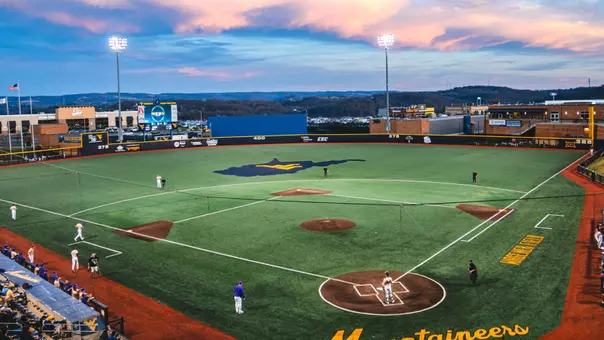
Sabins: July 5 we break ground. That's going to be a really big boost because we think we are going to have the best player development center in the nation. This sends our program to a whole different level. We've been playing catch-up in certain areas when it comes to facilities. For example, we are the only Big 12 program that doesn't have a covered indoor facility to hit, even though we have the football indoor facility. That's not a knock on that facility, but it's just a reality. We play in the coldest climate, and we've been playing catch-up, so we've kind of skipped the indoor stage to more of a technology-driven, player development lab that is going to be a big step for our program.
Antonik: What does your calendar look like for next month and into August before the players return to campus for the fall semester?
Sabins: First day of the fall semester, we have individuals (workouts). You are allowed to have four hours a week to work with your guys, so that's kind of a ramp-up until team practice, which is three or four weeks after the first day of school. We have some dead recruiting periods around Father's Day and July 4, but the summer period is all recruiting. I think our first team meeting is August 18, and we will do some staff meetings prior to that to make sure we are ready for them when they arrive. Otherwise, we will try and get away sometime for a week in early August.
Regardless, you've got to be smart with the phone and try and put that thing down. Since the end of the season there has been no time to put that thing down. Right now is the heart of getting your roster in place. The busiest time of the year, truthfully, is the second the last out of the season is recorded because there are 35 exit meetings, the transfer portal and constantly dealing with roster management. Then, our entire freshman class gets on campus Sunday, and its handling all those small details.
Antonik: You've got a lot of players coming back, and depending upon what happens with the draft, how many pieces do you think you are still going to need by the time the fall semester begins?
Sabins: We have an emphasis on starting pitching, just because good starting pitching is so hard to find. You want to attack that every year. We felt like we needed to bring in a middle infielder with JJ going in the draft to add some depth in the middle. Then, we hope to potentially add a power bat. Grant Hussey and Kyle West are question marks returning because of the draft. There are probably more unknowns with this draft cycle than we've ever had because our team played so well. The better the team plays, the more likely guys are going to get drafted and sign.
That's the nature of the beast because the system is still a little out of whack. We might have seven guys we don't know might be here or might not be here, and then the transfer portal closes before the draft happens, meaning no roster movement. You could miss on the high side of seven or you could be seven too low, potentially. You've got to be aggressive but also mindful of not having too many guys in the locker room because it hampers development. I can feel for coaches who are in a situation where it looks like they over-recruited a little bit, but if five of those guys come back, we're going to have a lot of competition on the field because we can't put ourselves in a situation where we don't have enough talent to compete on the field.
Antonik: Roster management these days is really an artform, I suppose.
Sabins: It really is, so you are always trying to get a feel for it. You are constantly talking to the kids just saying, 'Give me an idea what number are you talking about? What makes you go? I will love you and support you no matter what.' But information is so valuable.