WVU’s Brown Anticipating New Clock Rule to Impact Games in 2023
August 28, 2023 04:15 PM | Football, Blog
MORGANTOWN, W.Va. – One of the biggest criticisms of college football – that the games are too long – might have finally been rectified.
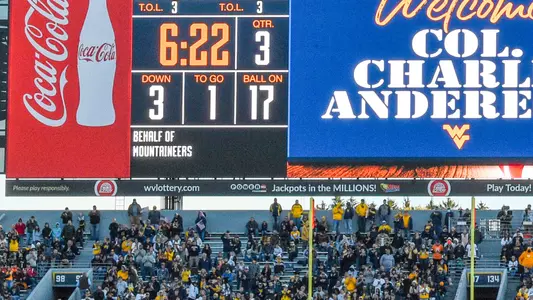
This year, the NCAA Rules Committee adopted a new rule of continuing to run the clock after first downs are gained when the ball remains in bounds, except for the last two minutes of each half. This was once done in the college game prior to 1968, and mirrors what the NFL is doing.
In the past, the clock was stopped whenever a team achieved a first down and would resume once the referee placed the ball.
The Notre Dame-Navy game is probably not a good example, because Navy is predominantly a run team and the Fighting Irish got up early and were effective running the football, but last Saturday, the two teams combined to run just 110 plays and it took less than three hours to complete the game.
West Virginia once ran 108 plays itself during a game at Maryland in 2014.
"That was Navy, so they weren't throwing the football. Notre Dame had success running the football early, too," Brown pointed out. "There were a lot of completions in the game, so I think that was a little bit of a unique situation."
True, but there was an overall reduction in the total amount of plays run during week zero games.
"I think last year there were something like 68 plays per game, and in week zero there were 63 and some change, and I think three or four minutes of game time (was reduced) when you took all of the week zero games together," Brown said. "I think that's what everybody kind of anticipated."
When the rule was adopted, the Football Rules Committee estimated it will trim seven or eight plays per game, which could amount to as many as 96 total plays per season. The total combined average number of plays was 180 per game last season, so that will dramatically reduce the number of potential exposures for teams and players.
It could also possibly benefit teams with depth issues.
If it only turns out being a reduction of five plays per game, as Brown indicated, that still means an average of 60 fewer plays per year, or roughly equal to or less than the number of plays in four West Virginia games last season.
Last year, the Mountaineers averaged 72.5 plays per game.
WVU ran 66 offensive plays against Texas Tech and lost. It ran 49 plays against Iowa State and 62 plays against Kansas State, both defeats. The Mountaineers did manage to upset Oklahoma State in the regular season finale despite running just 64 plays.
Nevertheless, it's clear the new clock rule is going to have an impact on football games, particularly for teams capable of running the ball in the fourth quarter. West Virginia is hopeful its veteran offensive line and stable of quality running backs can be put to good use this year.
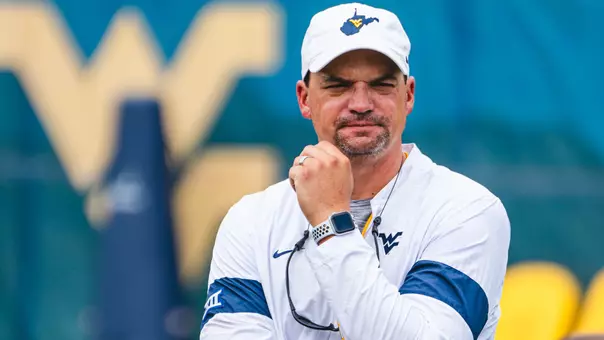
"It's going to benefit teams that can control the clock," Brown admitted. "You are going to be able to eat up some time."
On the other hand, teams that want to play a faster tempo are going to have to play smartly. Offensive coordinator Chad Scott explains.
"One of the things we've done to help ourselves in regard to that is hand the ball to the official," he said. "It's a daily challenge, particularly to the guys who catch the ball on the perimeter and running backs who run the ball outside on the perimeter. They need to run the ball back to the official to try and help us play that much faster."
Scott agrees that teams geared to running the ball can take full advantage of the new clock rule.
"We see some opportunities here," he admitted. "We had a situational scrimmage recently and we emphasized that, talking about two-minute and four-minute situations. If we can effectively run the football, the clock will help us a lot."
This morning the Mountaineers did their team portion of practice inside the Caperton Indoor Practice Facility with the doors closed and the sound system turned up high to try and simulate the crowd noise at Beaver Stadium.
Brown isn't sure that will be enough to match what he expects his team to encounter on Saturday, but Scott said it was pretty loud in there.
"My ears are still ringing," he joked.
This year, the NCAA Rules Committee adopted a new rule of continuing to run the clock after first downs are gained when the ball remains in bounds, except for the last two minutes of each half. This was once done in the college game prior to 1968, and mirrors what the NFL is doing.
In the past, the clock was stopped whenever a team achieved a first down and would resume once the referee placed the ball.
The Notre Dame-Navy game is probably not a good example, because Navy is predominantly a run team and the Fighting Irish got up early and were effective running the football, but last Saturday, the two teams combined to run just 110 plays and it took less than three hours to complete the game.
West Virginia once ran 108 plays itself during a game at Maryland in 2014.
"That was Navy, so they weren't throwing the football. Notre Dame had success running the football early, too," Brown pointed out. "There were a lot of completions in the game, so I think that was a little bit of a unique situation."
True, but there was an overall reduction in the total amount of plays run during week zero games.
"I think last year there were something like 68 plays per game, and in week zero there were 63 and some change, and I think three or four minutes of game time (was reduced) when you took all of the week zero games together," Brown said. "I think that's what everybody kind of anticipated."
When the rule was adopted, the Football Rules Committee estimated it will trim seven or eight plays per game, which could amount to as many as 96 total plays per season. The total combined average number of plays was 180 per game last season, so that will dramatically reduce the number of potential exposures for teams and players.
It could also possibly benefit teams with depth issues.
If it only turns out being a reduction of five plays per game, as Brown indicated, that still means an average of 60 fewer plays per year, or roughly equal to or less than the number of plays in four West Virginia games last season.
Last year, the Mountaineers averaged 72.5 plays per game.
WVU ran 66 offensive plays against Texas Tech and lost. It ran 49 plays against Iowa State and 62 plays against Kansas State, both defeats. The Mountaineers did manage to upset Oklahoma State in the regular season finale despite running just 64 plays.
Nevertheless, it's clear the new clock rule is going to have an impact on football games, particularly for teams capable of running the ball in the fourth quarter. West Virginia is hopeful its veteran offensive line and stable of quality running backs can be put to good use this year.
"It's going to benefit teams that can control the clock," Brown admitted. "You are going to be able to eat up some time."
On the other hand, teams that want to play a faster tempo are going to have to play smartly. Offensive coordinator Chad Scott explains.
"One of the things we've done to help ourselves in regard to that is hand the ball to the official," he said. "It's a daily challenge, particularly to the guys who catch the ball on the perimeter and running backs who run the ball outside on the perimeter. They need to run the ball back to the official to try and help us play that much faster."
Scott agrees that teams geared to running the ball can take full advantage of the new clock rule.
"We see some opportunities here," he admitted. "We had a situational scrimmage recently and we emphasized that, talking about two-minute and four-minute situations. If we can effectively run the football, the clock will help us a lot."
This morning the Mountaineers did their team portion of practice inside the Caperton Indoor Practice Facility with the doors closed and the sound system turned up high to try and simulate the crowd noise at Beaver Stadium.
Brown isn't sure that will be enough to match what he expects his team to encounter on Saturday, but Scott said it was pretty loud in there.
"My ears are still ringing," he joked.


Friday, October 16
Wednesday, October 14
Wednesday, October 14
Wednesday, October 14